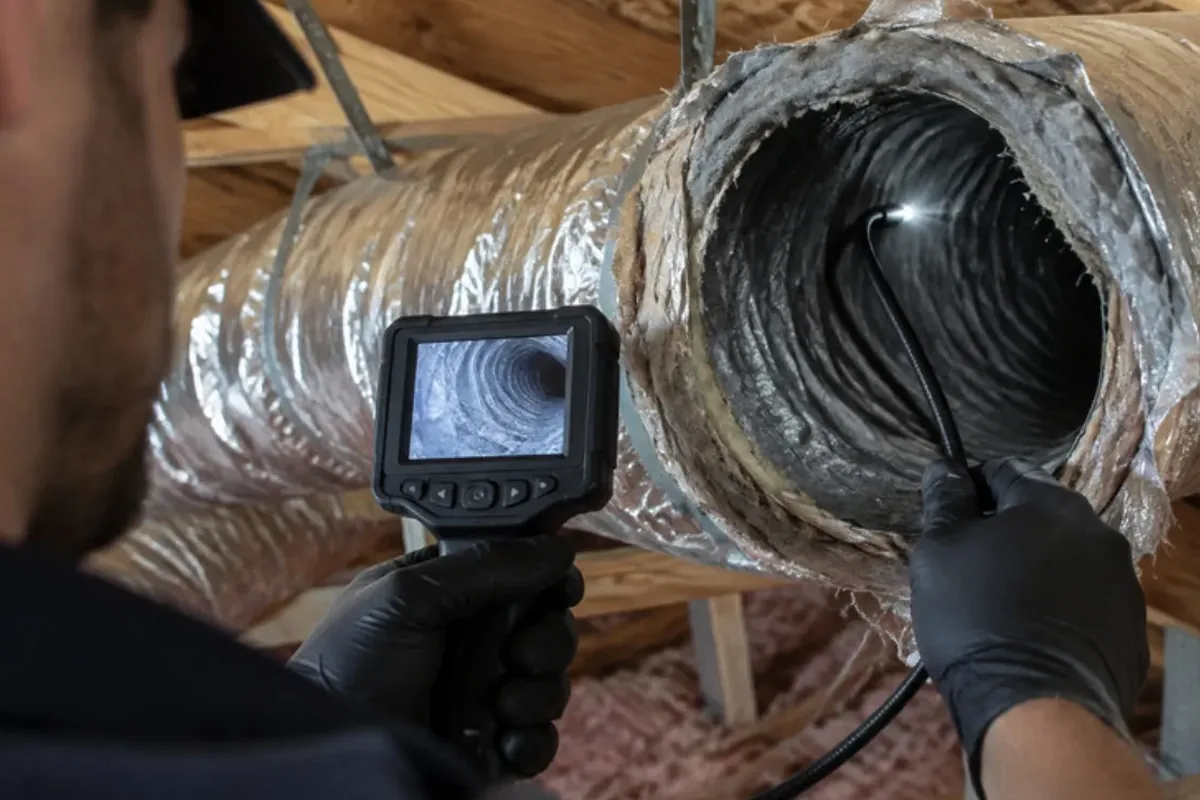
Mold in a heating and cooling system nearly always starts with water sitting where it should not: a full drain pan, a clogged condensate line or cold duct skin dripping in warm, muggy air. Cleaning without stopping that water tends to bring it back. Call the number on this page to be connected with a local mold company in Kittrell.
Symptom and likely spot
| What you notice | Where it often starts |
|---|---|
| Musty air at start-up | Coil or drain pan |
| Specks at a grille | Supply box or duct |
| Stained ceiling | Attic unit or drain line |
Older systems, newer homes
Older houses around Kittrell may have ductwork wrapped decades ago, with insulation that has absorbed moisture many times. Newer subdivisions bring tight construction and large systems, where poor drainage or sealing mistakes can lead to the same wet-coil pattern.
Large lots and outbuildings near Kittrell sometimes mean long duct runs or a second system in a detached shop or guest house, where nobody checks the drain line for months.
Cost drivers at a glance
- Size of the system and length of duct
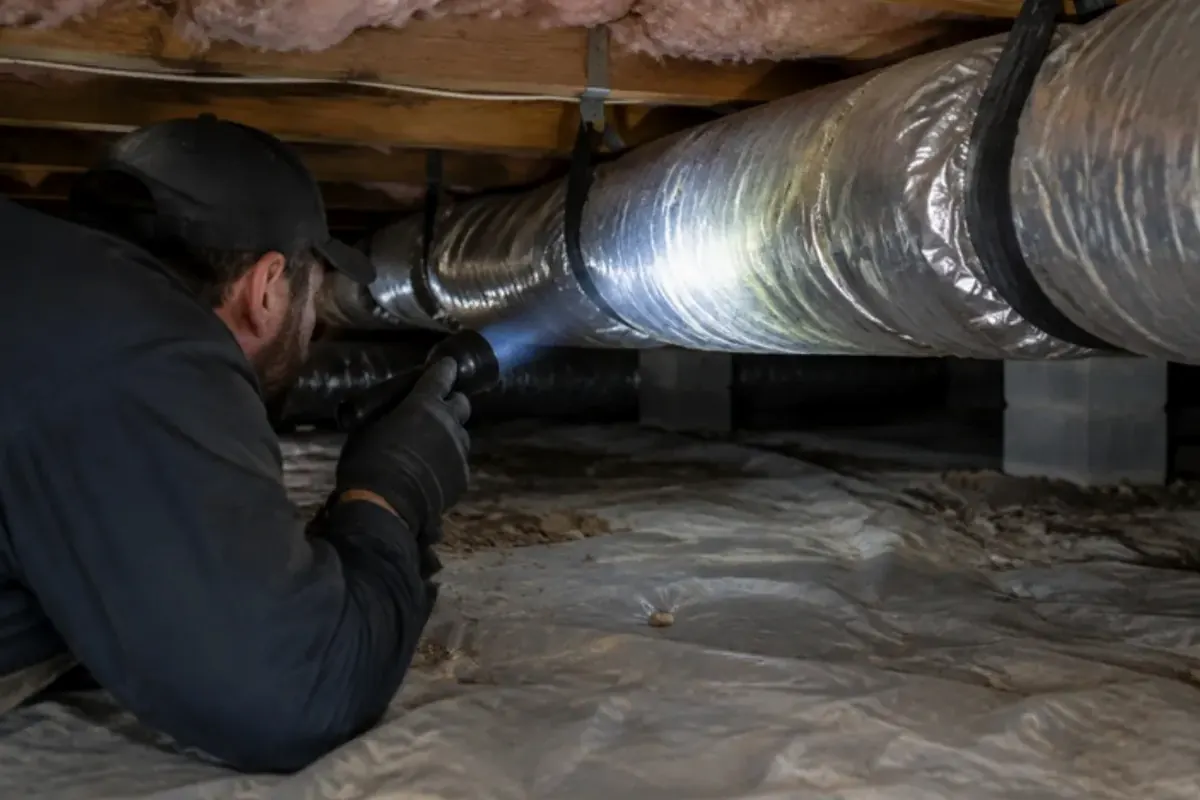
- Crawl space or attic access
- Insulation that has to come out
- Water repair behind the mold
- Any rebuild or equipment work afterward
Local facts for a Kittrell mold job
For a big tear-out and rebuild, look the company up on the NC Licensing Board for General Contractors site; its search works by name, number or county, and a license is required at $40,000 and up.
Tenants should put leak and mold complaints in writing. North Carolina's landlord statute, G.S. 42-42, covers repairs needed to keep a rental fit to live in.
Cleanup on its own rarely needs a permit. Replacing framing, wiring, ductwork or plumbing afterward can, and Vance County Planning & Inspections can tell you what applies.
After heavy Piedmont rain, the NC Flood Risk Information System is the place to check a property's flood zone before talking to the insurance company.
Callers here are often matched with companies that work in Louisburg, Franklinton and Youngsville as well.
Bring the paperwork you have
Past service invoices, the age of the unit, the date of any drain clog and photos of stains help a company understand the history. Also mention recent roof work, plumbing repairs or crawl space changes, because those often explain where the water began.
Fix the ground, not just the air
Gutters that dump water at the foundation and grading that slopes toward the house keep a crawl space damp. Extend downspouts, check vents and moisture barriers, and the ducts above stay drier. This is often the least expensive step on the list.
HVAC & Duct Mold Removal questions in Kittrell
Can mold really grow inside HVAC ducts?
Who fixes the equipment itself?
What about a crawl space unit near Kittrell?
Will the company also repair the water source?
More mold services in Kittrell
HVAC & Duct Mold Removal nearby
Helpful guides
Sources
- Vance County Planning & Inspections
- N.C. General Statutes 87-1: general contractor license
- NC Licensing Board for General Contractors: consumer FAQ
- NC Division of Public Health: choosing a mold consultant
- N.C. General Statutes 42-42: landlord to provide fit premises
- NC Flood Risk Information System
- EPA: A Brief Guide to Mold, Moisture and Your Home
Last updated: