Durham homes range from older central neighborhoods to newer subdivisions, and both can grow mold wherever moisture lingers, especially in crawl spaces, attics and around leaks. We are a free referral service, not a mold company. Call the number on this page to be connected with a local mold company in Durham.
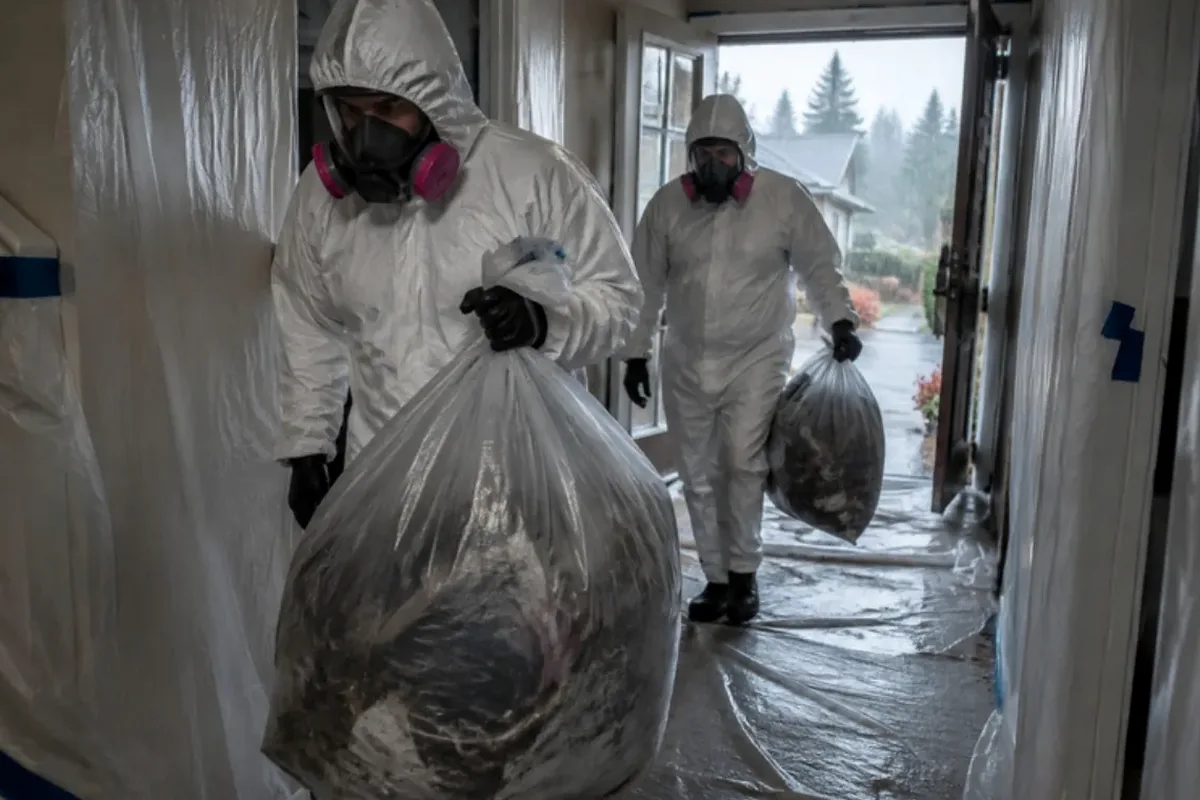
Mold services in Durham
An old city and a new one, side by side
Few places in the Triangle mix building eras the way Durham does. The city describes the Third Fork Creek watershed as an older part of town south of the Durham Freeway, and neighborhoods such as Trinity Park, Watts-Hillandale, Duke Park, Walltown, Forest Hills, Hayti and Golden Belt carry that older character. Newer subdivisions fill in around them. One housing dataset puts the median build year for the city at 1995, so a typical house is neither ancient nor brand new.
That mix matters when mold shows up. Older houses often have vented crawl spaces, original plumbing and ductwork that has been patched over decades. Newer ones can have tight envelopes that hold humidity inside when an air handler or a drain line misbehaves. In both cases the cause is nearly always water: a slow leak, a sweating duct, or damp air drifting up from bare red clay beneath the floor.
Where mold tends to turn up
- Crawl spaces. Wall vents let humid summer air in, and cool ducts and joists collect condensation. Advanced Energy notes that many crawl space homes in North Carolina struggle with moisture, most noticeably in humid spring and summer weather.
- Attics. Bath fans vented into the attic and leaky roof flashing leave stained decking.
- Around creeks and low lots. Third Fork Creek drains toward Jordan Lake and the Cape Fear basin, and after tropical downpours low spots can take on water.
- Rentals. Rooms near the university areas and older duplexes often have bathroom or window-sill mold that tenants spot first.
What happens when you call
You describe what you see, and we route the call to an independent company that serves Durham. Many start with a visual inspection and moisture readings, then explain whether testing is worthwhile. EPA says that when mold is plainly visible, sampling is usually unnecessary, and that patches smaller than about 10 square feet can often be handled by the homeowner. Anything larger, or anything tied to a hidden leak, is where a professional earns the fee.
Permits and the contractor license check
Building permits here come from the Durham City-County Inspections Department, which serves both the city and the county. Under G.S. 160D-1110, work costing $40,000 or less on a single-family home generally does not need a permit if it follows the State Building Code, but changes to plumbing, heating, cooling or electrical systems are not covered by that exemption, so ask the department before a repair that touches them.
North Carolina requires a general contractor license when a project reaches $40,000, and the NC Licensing Board for General Contractors has an online lookup by name, number or county. The NC Division of Public Health also advises against hiring a consultant who both assesses and removes mold, so keep those roles separate when you can.
Renters and the practical next step
Heat-pump condensation, a stuck bath fan or a weeping supply line can all start a patch of growth that the occupant sees long before a landlord does. If you rent, G.S. 42-42 requires landlords to keep a home fit and habitable, and repair requests should be made in writing. Photos and dates help, and so does telling the company on the phone exactly which room, floor and wall the stain sits on, because that lets them bring the right moisture meter and plan the visit.
Common questions in Durham
Who handles building permits for mold repairs in Durham?
Do older Durham neighborhoods get more mold?
Do I need a general contractor license for mold work?
I rent in Durham. Who pays to fix mold?
Nearby cities and towns
Sources
- City of Durham: Third Fork Creek
- City of Durham: City-County Inspections
- City-data.com: Durham housing
- Durham neighborhoods list
- Advanced Energy: crawl spaces
- EPA: A Brief Guide to Mold, Moisture and Your Home
- G.S. 160D-1110, building permit exemption
- NC Licensing Board for General Contractors: consumer FAQ
- G.S. 87-1, general contractor license
- NC Division of Public Health: choosing a mold consultant
- G.S. 42-42, landlord duties
Last updated: