A flooded crawl space is easy to ignore because nobody goes down there, yet wet insulation and subfloor framing there can grow mold for weeks. Standing water is the signal to call. Call the number on this page to be connected with a local mold company in Durham.
Health and safety first
Floodwater may carry contaminants, so wear gloves and boots and keep children and pets out. If you have health concerns, talk with your doctor. Stay clear of electrical outlets and appliances that sat in water until someone qualified checks them. Keep young children away from any wet area.
Creek and river flooding
Creeks that run through neighborhoods and rivers like the Neuse and Haw can rise quickly after sustained rain. Homes near them, or on low ground in Durham County, may see water in yards, garages and lower floors within hours. Homes along creek corridors see it often.
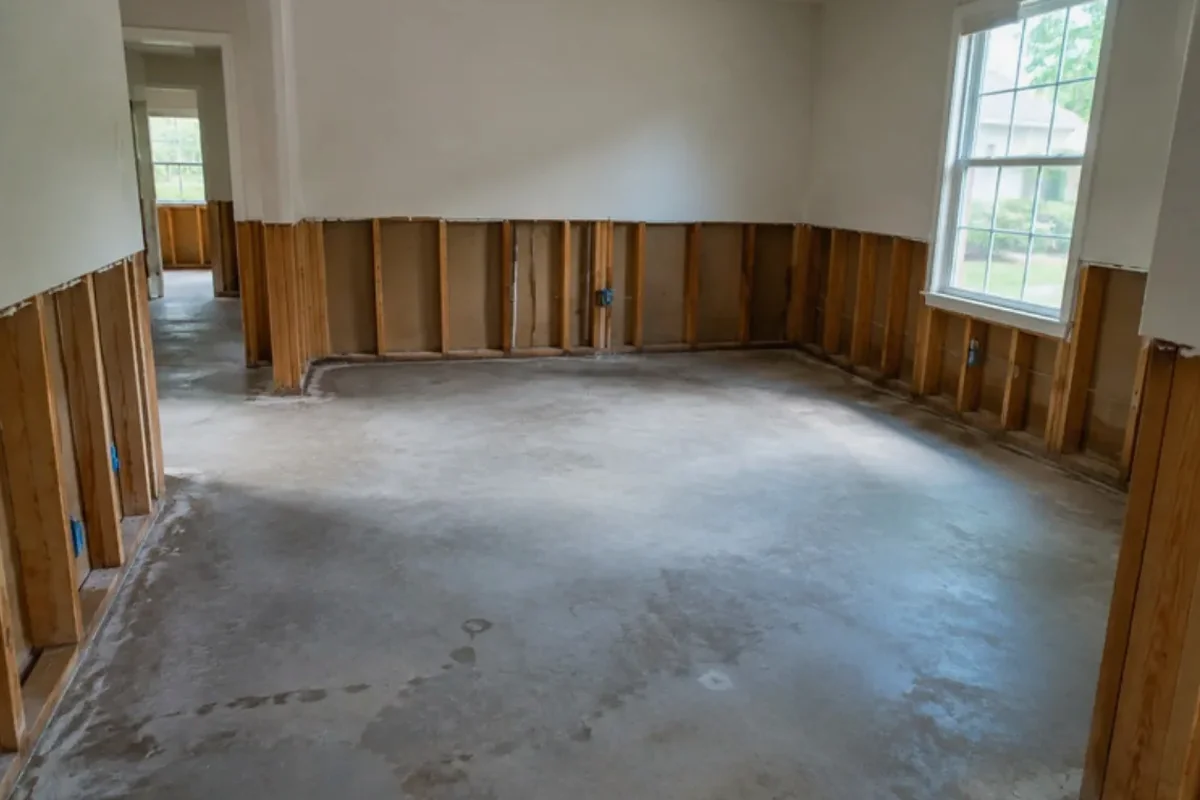
A lot of Durham's homes went up in the 1990s, with tighter envelopes and slab foundations, so floodwater that gets in tends to stay trapped behind drywall and flooring.
Access and house type
A crawl space with room to work costs less to clean than one with ducts, pipes and tight corners. Finished walk-out lower levels, tile, built-ins and cabinets also raise the work because each must come apart before it can dry. Tight spaces mean slower, harder work.
Before you hire in Durham
State public health staff advise asking questions before you pay, checking whether a company belongs to trade groups and follows industry guidelines, and keeping the assessment separate from the cleanup.
In a rental, written notice to the landlord starts the clock under state law, which requires repairs that keep the unit in a fit and habitable condition.
Under G.S. 160D-1110, many repairs of $40,000 or less in a house need no permit, but structural, plumbing, electrical and HVAC changes do. Check with the Durham City-County Inspections Department.
Flood water and a burst pipe are usually treated differently by insurers; the state's FRIS flood maps show whether a lot sits in a mapped flood zone.
Help is also available nearby in Morrisville, Carrboro and Butner.
Typical order of work
- Remove standing water and debris.
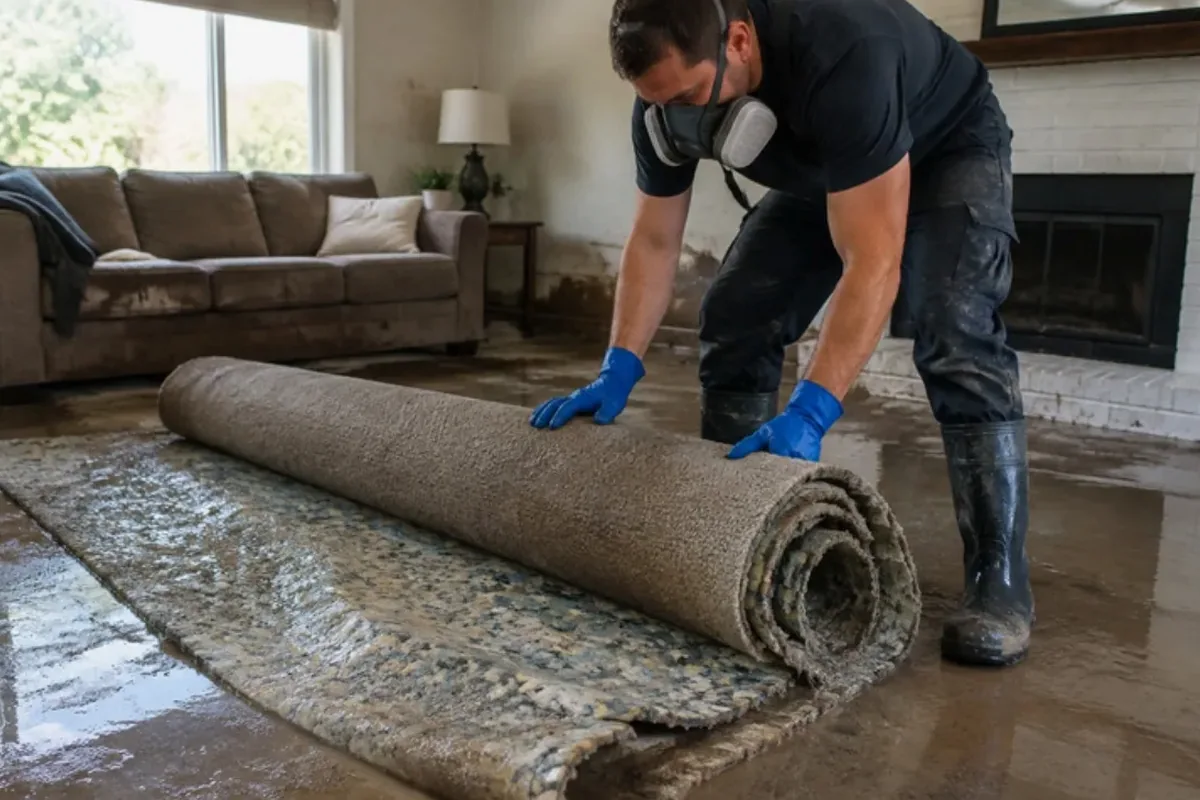
- Pull soaked carpet, pad and insulation.
- Cut out wall sections that wicked water.
- Clean surfaces and dry the structure.
- Verify moisture levels before rebuilding.
Each step should be documented with readings and photos so the scope can be checked later.
Do not rebuild over damp materials
Closing up walls, laying new flooring or painting before the structure is truly dry traps moisture and invites mold behind the finish. Wait for confirmed readings, even if the schedule slips, because redoing the work costs more. A written scope helps both sides when the job changes.
Around Durham
Calls come in from across Durham, including Trinity Park, Watts-Hillandale, Duke Park.
The City of Durham describes the Third Fork Creek watershed as an older portion of Durham south of the Durham Freeway; it drains to Jordan Lake and the Cape Fear River basin.
Storm & Flood Mold Removal questions in Durham
How soon does mold grow after a flood?
How do I know if the crawl space is the problem?
Does a heavy tropical rain count as a flood?
What about a flooded detached garage or shed?
More mold services in Durham
Storm & Flood Mold Removal nearby
Helpful guides
Sources
- Durham City-County Inspections Department
- N.C. General Statutes 87-1: general contractor license
- NC Licensing Board for General Contractors: consumer FAQ
- NC Division of Public Health: choosing a mold consultant
- N.C. General Statutes 42-42: landlord to provide fit premises
- NC Flood Risk Information System
- EPA: A Brief Guide to Mold, Moisture and Your Home
Last updated: