Porous materials such as soaked drywall, ceiling tile and insulation that stay moldy usually have to be removed, while framing and hard surfaces are cleaned. That follows EPA guidance and shapes most work plans. Call the number on this page to be connected with a local mold company in Durham.
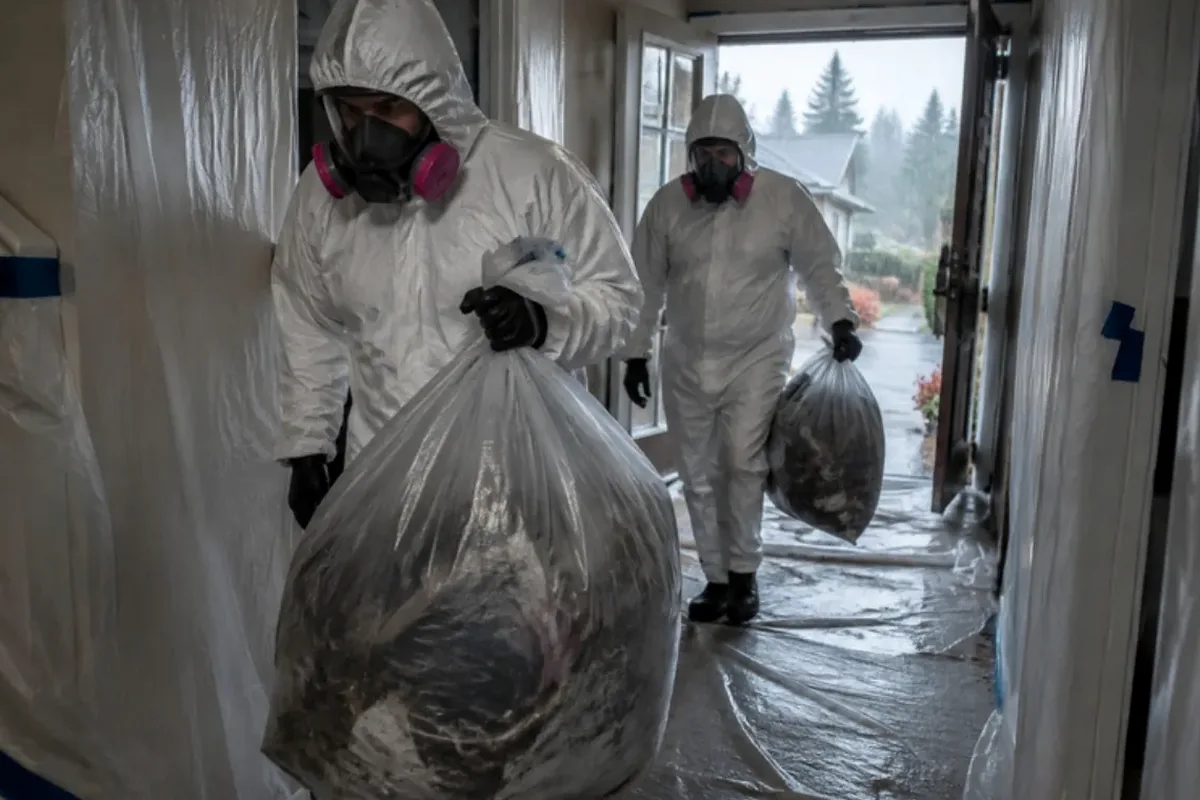
Six steps, in order
Plans differ in detail, but most follow this sequence from first visit to sign-off:
- Repair the water source
- Seal and ventilate the work zone
- Remove unsalvageable material
- Clean what stays
- Dry the structure fully
- Check before rebuilding
Your company may reorder a step or two, so ask them to explain why and what it changes.
Red clay holds on to water
Piedmont clay drains slowly, so rain that runs toward a foundation tends to linger. Short gutter downspouts, flat grading and clogged drains all push that water to the walls. Wet soil then feeds humidity into the crawl space and lower walls.
Redirecting runoff is often the simplest lasting repair here.
Houses from the 1990s in Durham usually have modern drywall and engineered framing, so cleanup often turns on how quickly a leak was caught and how fast the wet layers were dried.
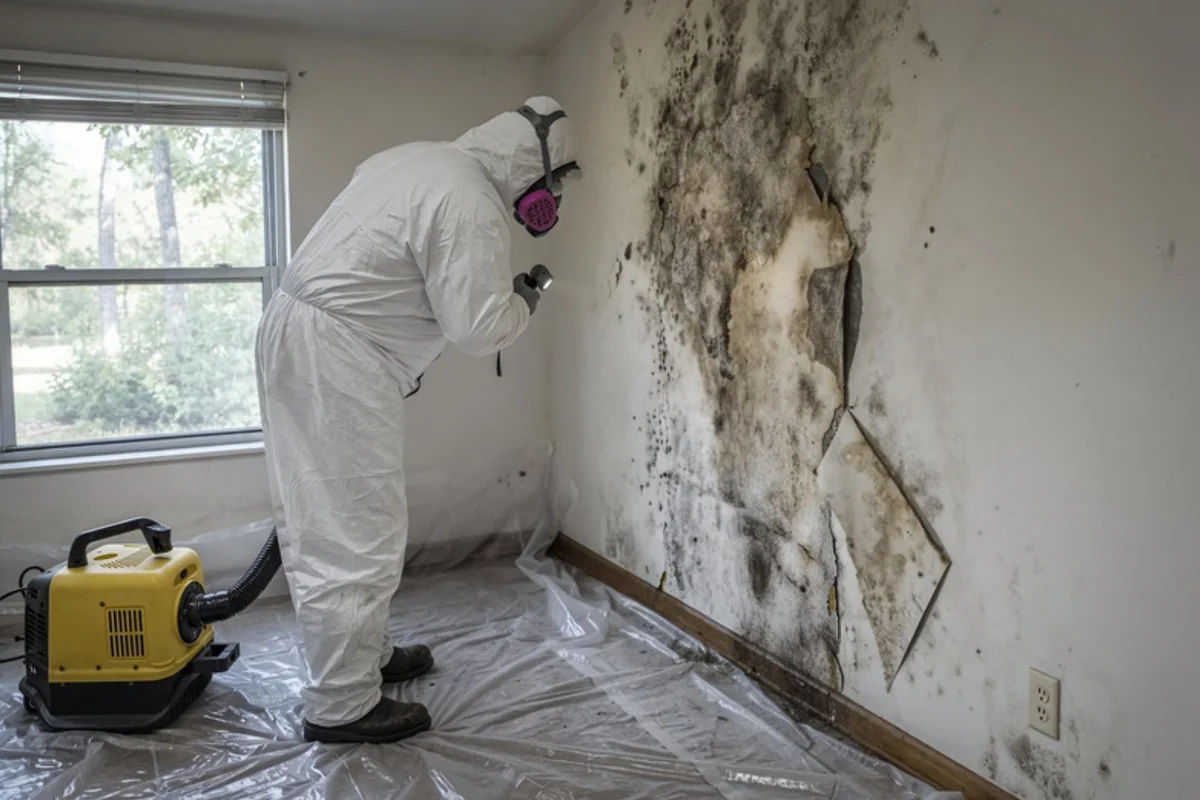
Rooms, not just spots
Companies often price by area and by number of rooms touched, since each one needs its own sealing and cleaning. A single closet is a small job, while a damp wall running through a kitchen and hallway is a larger one.
Ask for each room to be listed on the quote so you can see what drives the total.
Rules and offices for Durham mold jobs
Ask whether the job, including any rebuild, could reach $40,000. At that size state law requires a general contractor license, which you can confirm in the NCLBGC online lookup by name or license number.
Renting? N.C.G.S. 42-42 requires landlords to keep a home fit and habitable and to repair supplied plumbing and heating; outside an emergency, send the repair request in writing.
Cleanup on its own rarely needs a permit. Replacing framing, wiring, ductwork or plumbing afterward can, and the Durham City-County Inspections Department can tell you what applies.
If creek or river water came inside, look the address up in North Carolina's Flood Risk Information System and call your insurer before cleanup begins.
Help is also available nearby in Morrisville, Carrboro and Butner.
Questions worth asking
- What is the written scope?
- How will the area be sealed?
- Who fixes the water source?
- How will drying be measured?
- Who does the final check?
Write the answers down so you can compare companies side by side. A hesitant reply is useful information.
Warning signs to act on
A musty odor that lingers, ceiling stains that spread, peeling paint or a floor that feels soft are good reasons to call. If you have health concerns, talk with your doctor, and do not wait for the problem to grow while you decide.
Treat any water event as urgent, even if the area looks dry by the next day.
Getting to know Durham
Calls come in from across Durham, including Trinity Park, Watts-Hillandale, Duke Park.
The City of Durham describes the Third Fork Creek watershed as an older portion of Durham south of the Durham Freeway; it drains to Jordan Lake and the Cape Fear River basin.
Mold Removal & Remediation questions in Durham
What gets thrown away and what gets saved?
Does a company need a license for mold work in North Carolina?
What if mold keeps coming back after cleanup?
How are crawl space jobs different?
More mold services in Durham
Mold Removal & Remediation nearby
Helpful guides
Sources
- Durham City-County Inspections Department
- N.C. General Statutes 87-1: general contractor license
- NC Licensing Board for General Contractors: consumer FAQ
- NC Division of Public Health: choosing a mold consultant
- N.C. General Statutes 42-42: landlord to provide fit premises
- NC Flood Risk Information System
- EPA: A Brief Guide to Mold, Moisture and Your Home
Last updated: