If you have health concerns, talk with your doctor. An inspection does not diagnose anything about people, it only documents building conditions such as moisture, damage and visible growth. Call the number on this page to be connected with a local mold company in Durham.
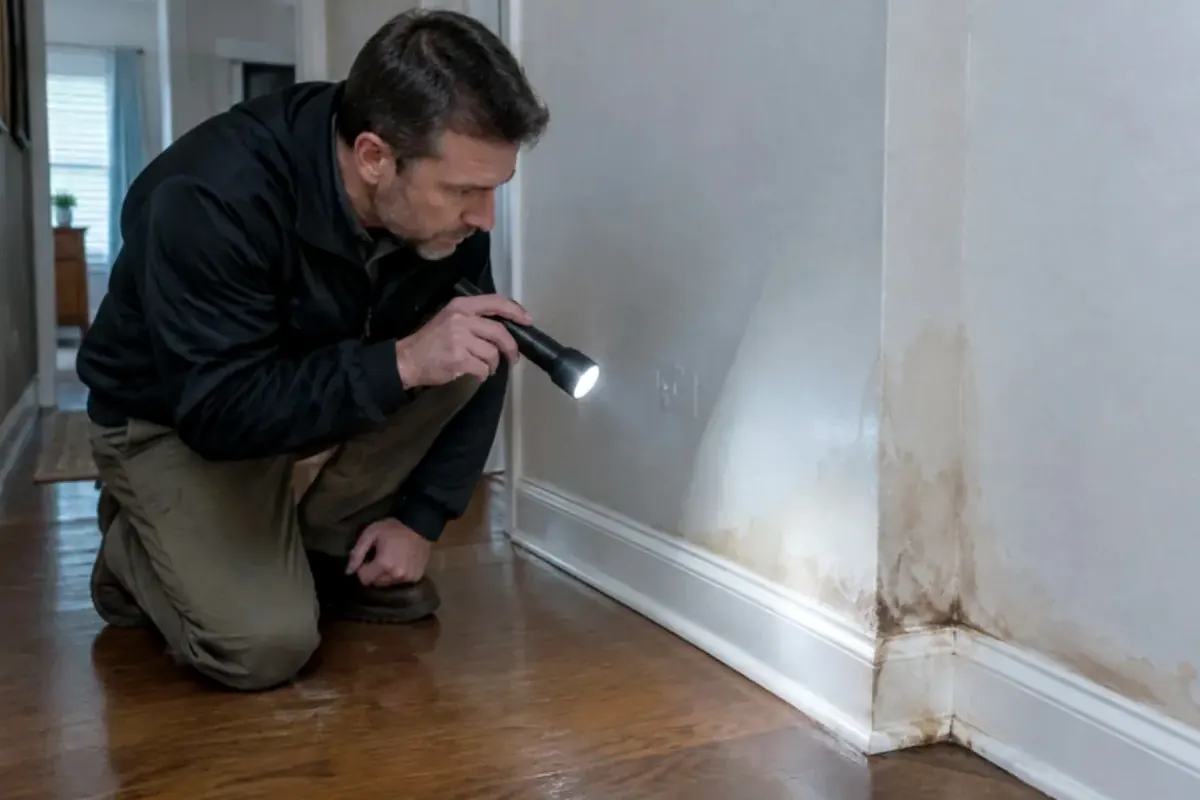
Visible spots versus hidden ones
The patches you see are often the smaller part of a problem. Growth behind cabinets, above ceiling tiles or on the underside of the subfloor stays out of view for years, which is why a trained eye matters when the signs are subtle.
Tell the inspector about anything odd.
The usual walk-through
- Exterior grading and gutters
- Crawl space or basement
- Plumbing and water heater
- Air handler and ducts
- Attic and roof deck
- Bathrooms, kitchen, laundry
Inspectors usually work from the outside in, which keeps the picture complete. Expect the visit to include a short summary conversation at the end, before the full written report arrives, so you can ask questions while the details are fresh.
Many Durham houses are from the 1990s, so inspectors often check window flashing, stucco or siding joints and ducts, which are common trouble spots on newer construction.
Where the guide helps
Our cost guide covers typical line items, and our guide on inspection versus testing explains why sampling is not always the first step. Reading both before you call makes it easier to judge any quote you receive.
Ask each company for its report format.
Before you hire in Durham
Be wary of anyone who wants air sampling as the very first step. North Carolina's public health guidance warns about exactly that, and suggests asking plenty of questions before you pay.
Renting? N.C.G.S. 42-42 requires landlords to keep a home fit and habitable and to repair supplied plumbing and heating; outside an emergency, send the repair request in writing.
Cleanup on its own rarely needs a permit. Replacing framing, wiring, ductwork or plumbing afterward can, and the Durham City-County Inspections Department can tell you what applies.
Flood water and a burst pipe are usually treated differently by insurers; the state's FRIS flood maps show whether a lot sits in a mapped flood zone.
Many of the same companies also take calls from Morrisville, Carrboro and Butner.
What happens when nothing is found
Sometimes the inspector finds dust, condensation or an old stain with no active moisture. That is useful too. The report documents that conditions were checked, and gives practical tips such as humidity control to keep the home that way.
Humidity control is the usual place to start.
Humidity as ongoing prevention
EPA suggests keeping indoor humidity below about 60 percent, ideally 30 to 50. A hygrometer costs little, and a dehumidifier or a sealed crawl space with a dedicated unit can hold the number steady through a muggy summer.
Check the reading in a few different rooms, especially the ones that smell musty.
Getting to know Durham
Calls come in from across Durham, including Trinity Park, Watts-Hillandale, Duke Park.
The City of Durham describes the Third Fork Creek watershed as an older portion of Durham south of the Durham Freeway; it drains to Jordan Lake and the Cape Fear River basin.
Mold Inspection questions in Durham
Should the inspector also do the cleanup?
What does the report look like?
Who pays for the inspection in a rental?
Will I need permits for repairs found by the inspection?
More mold services in Durham
Mold Inspection nearby
Helpful guides
Sources
- Durham City-County Inspections Department
- N.C. General Statutes 87-1: general contractor license
- NC Licensing Board for General Contractors: consumer FAQ
- NC Division of Public Health: choosing a mold consultant
- N.C. General Statutes 42-42: landlord to provide fit premises
- NC Flood Risk Information System
- EPA: A Brief Guide to Mold, Moisture and Your Home
Last updated: