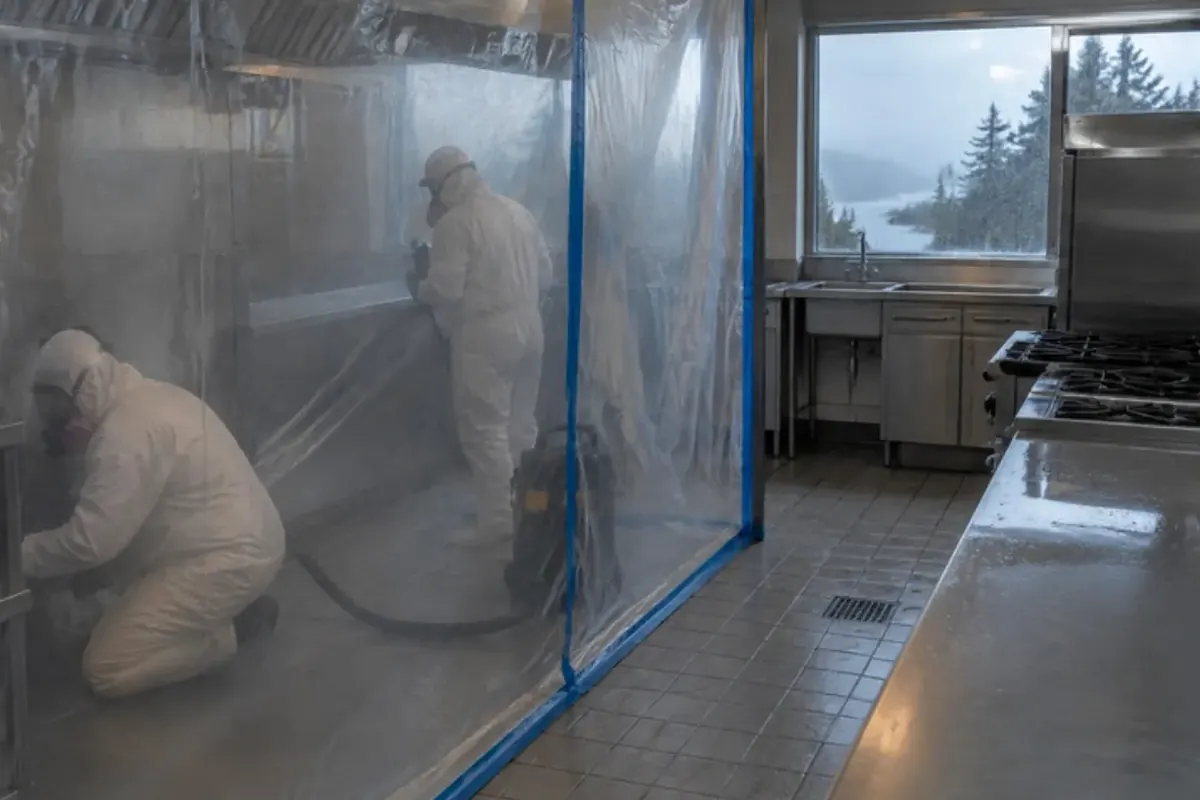
Spots under about 10 square feet are the size EPA says a homeowner can usually handle, and commercial spaces involve staff, customers and larger systems. Most business owners and managers are better off with a company that can contain the area and handle the waste. Call the number on this page to be connected with a local mold company in Durham.
Signs a building has a moisture problem
Look for stained or sagging ceiling tiles, peeling paint, a damp smell in a storeroom or restroom, warped baseboards and fuzzy spots on walls behind shelving. Complaints from several people about the same odor in the same corner are a strong clue.
Big HVAC, big condensation
Rooftop units and large air handlers move a lot of humid Piedmont air. Clogged condensate lines, torn duct wrap and short cycling put water into ceilings and walls. Many commercial cases begin with equipment rather than the building shell, which is why the first visit usually includes the mechanical room.
A lot of Durham's apartments and neighborhood retail went up in the 1990s, and tight envelopes with large HVAC systems can trap moisture when equipment is poorly maintained.

Insurance and documentation
A commercial property policy may respond to sudden water events and not to long-term seepage. Start the claim before work begins, keep photos and moisture readings, and ask the adjuster what records are expected. Your agent can explain the policy terms, including any limits on mold or water damage.
Local facts for a Durham mold job
For a big tear-out and rebuild, look the company up on the NC Licensing Board for General Contractors site; its search works by name, number or county, and a license is required at $40,000 and up.
Tenants should put leak and mold complaints in writing. North Carolina's landlord statute, G.S. 42-42, covers repairs needed to keep a rental fit to live in.
Cleanup on its own rarely needs a permit. Replacing framing, wiring, ductwork or plumbing afterward can, and the Durham City-County Inspections Department can tell you what applies.
After heavy Piedmont rain, the NC Flood Risk Information System is the place to check a property's flood zone before talking to the insurance company.
Callers here are often matched with companies that work in Morrisville, Carrboro and Butner as well.
Final documents to request
Ask for a closing report listing the areas treated, materials removed, equipment used and moisture readings at the end. Clearance testing may be wanted by a lender, insurer or tenant, and having a written record makes later conversations simpler.
Tenant duties and the law
Residential tenants in apartment buildings have rights under G.S. 42-42, which expects landlords to keep units fit and habitable. Commercial leases are different and rely on their own terms. Either way, give written notice and keep a copy.
Around Durham
Calls come in from across Durham, including Trinity Park, Watts-Hillandale, Duke Park.
The City of Durham describes the Third Fork Creek watershed as an older portion of Durham south of the Durham Freeway; it drains to Jordan Lake and the Cape Fear River basin.
Commercial Mold Remediation questions in Durham
Who pays, the landlord or the tenant?
Is testing required for a commercial job?
Does a commercial job need a contractor license?
What documents should I keep?
More mold services in Durham
Commercial Mold Remediation nearby
Helpful guides
Sources
- Durham City-County Inspections Department
- N.C. General Statutes 87-1: general contractor license
- NC Licensing Board for General Contractors: consumer FAQ
- NC Division of Public Health: choosing a mold consultant
- N.C. General Statutes 42-42: landlord to provide fit premises
- NC Flood Risk Information System
- EPA: A Brief Guide to Mold, Moisture and Your Home
Last updated: