Mold in a heating and cooling system nearly always starts with water sitting where it should not: a full drain pan, a clogged condensate line or cold duct skin dripping in warm, muggy air. Cleaning without stopping that water tends to bring it back. Call the number on this page to be connected with a local mold company in Angier.
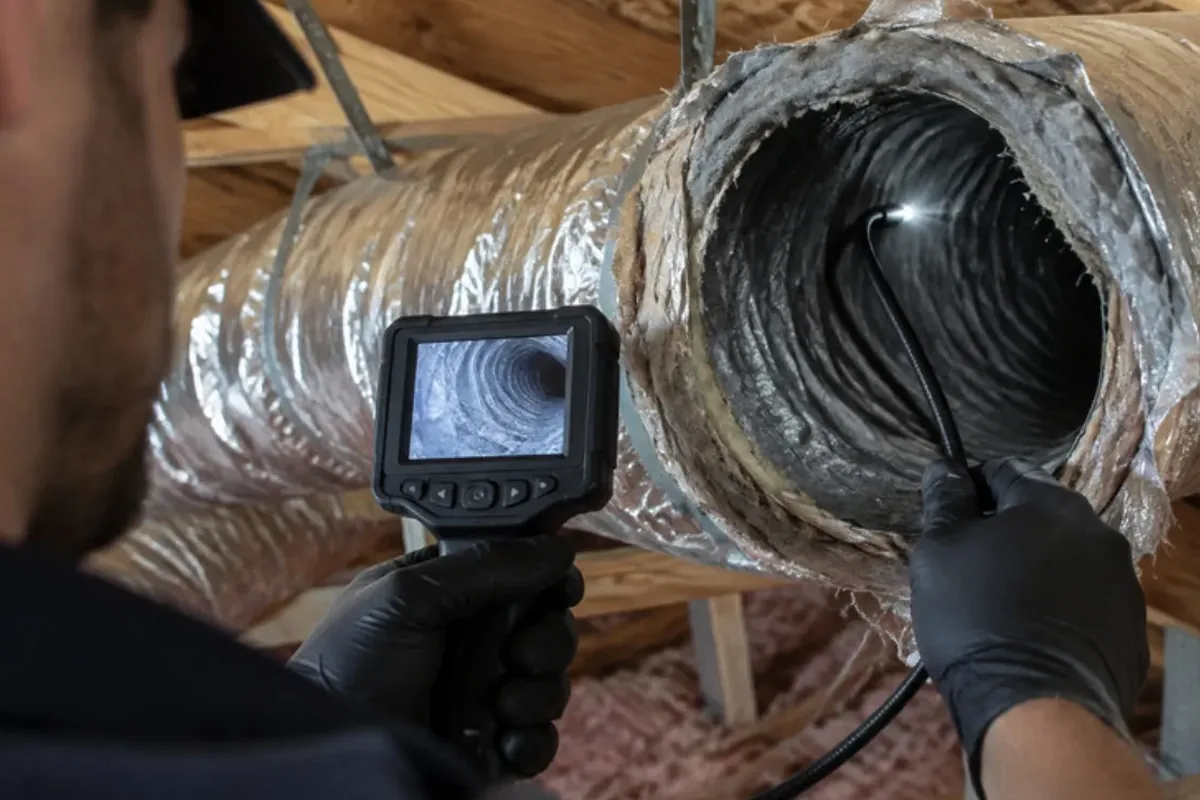
What a sweating duct looks like
Cold supply ducts in a hot, muggy crawl space or attic gather droplets on the outside, much like a glass of iced tea. Watch for dripping wrap, dark stains on nearby framing, and soil or subfloor that stays damp even on dry days.
Winter is not a free pass
A heat pump still has a coil and a drain, and a hard freeze can crack a condensate line or a nearby pipe. A cold snap followed by a thaw sometimes shows up as a wet platform and a musty smell once the weather turns damp again.
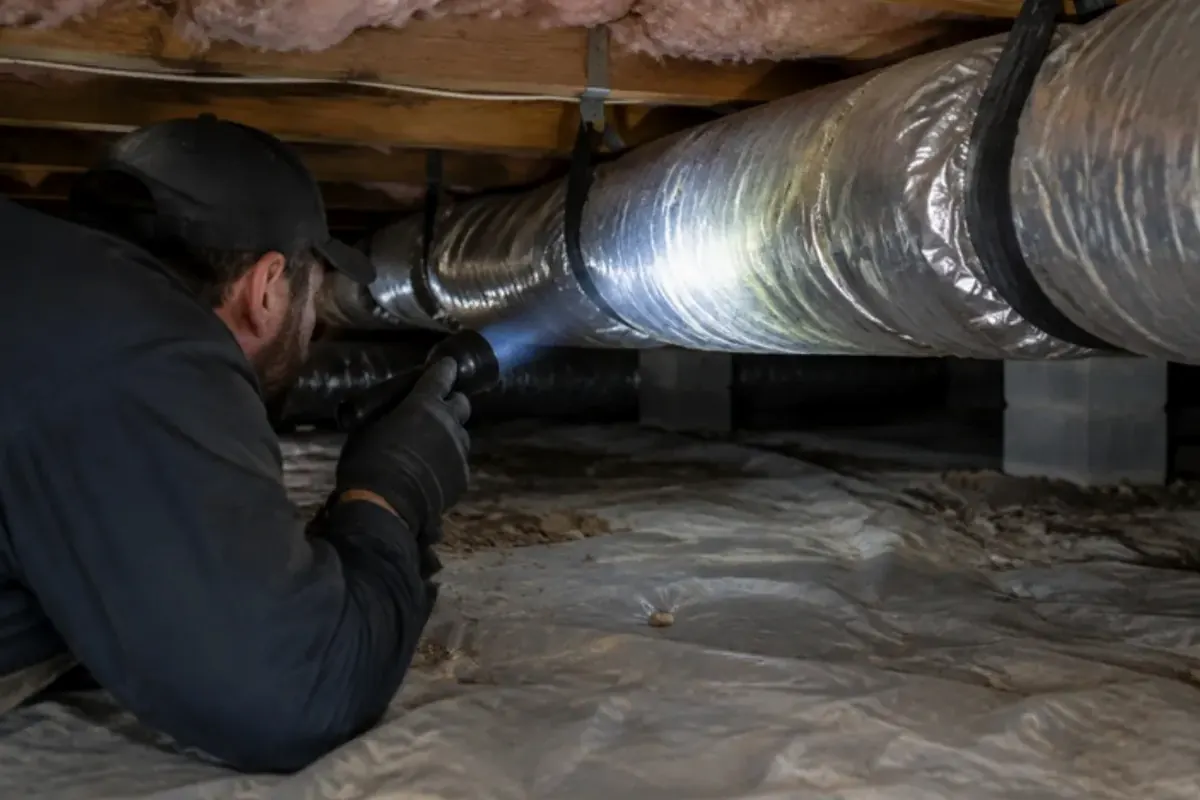
Before you hire in Angier
State public health staff advise asking questions before you pay, checking whether a company belongs to trade groups and follows industry guidelines, and keeping the assessment separate from the cleanup.
In a rental, written notice to the landlord starts the clock under state law, which requires repairs that keep the unit in a fit and habitable condition.
Under G.S. 160D-1110, many repairs of $40,000 or less in a house need no permit, but structural, plumbing, electrical and HVAC changes do. Check with the local building department.
Flood water and a burst pipe are usually treated differently by insurers; the state's FRIS flood maps show whether a lot sits in a mapped flood zone.
Help is also available nearby in Fuquay-Varina, Willow Spring and Coats.
What shapes the price
Access comes first: a unit in an open closet is quicker to work on than one wedged into a low crawl space. Next are how much duct is affected, whether insulation must be replaced, and how many hours the containment and cleaning will take.
Containment and the fan
Running a contaminated system moves dust and spores to every room it serves, so a careful company keeps the fan off, seals the registers it can reach, and uses negative air or similar controls. Ask how the home will be protected during the work.
When to act quickly
Visible growth on the coil, wet insulation on a trunk line or ceiling stains below an air handler should not wait for the next season. Turn the system off, dry any standing water you can reach safely, and call. EPA suggests drying wet materials within 24 to 48 hours.
HVAC & Duct Mold Removal questions in Angier
Can mold really grow inside HVAC ducts?
Does a heat pump get moldy more than a furnace?
Can my landlord ignore mold in the HVAC?
What about a crawl space unit near Angier?
More mold services in Angier
HVAC & Duct Mold Removal nearby
Helpful guides
Sources
- N.C. General Statutes 87-1: general contractor license
- NC Licensing Board for General Contractors: consumer FAQ
- NC Division of Public Health: choosing a mold consultant
- N.C. General Statutes 42-42: landlord to provide fit premises
- NC Flood Risk Information System
- EPA: A Brief Guide to Mold, Moisture and Your Home
Last updated: