If the visible patch is under about 10 square feet and the wall is solid and dry, EPA says many homeowners can clean it. Soft or recurring spots are a job for a mold company. Call the number on this page to be connected with a local mold company in Angier.
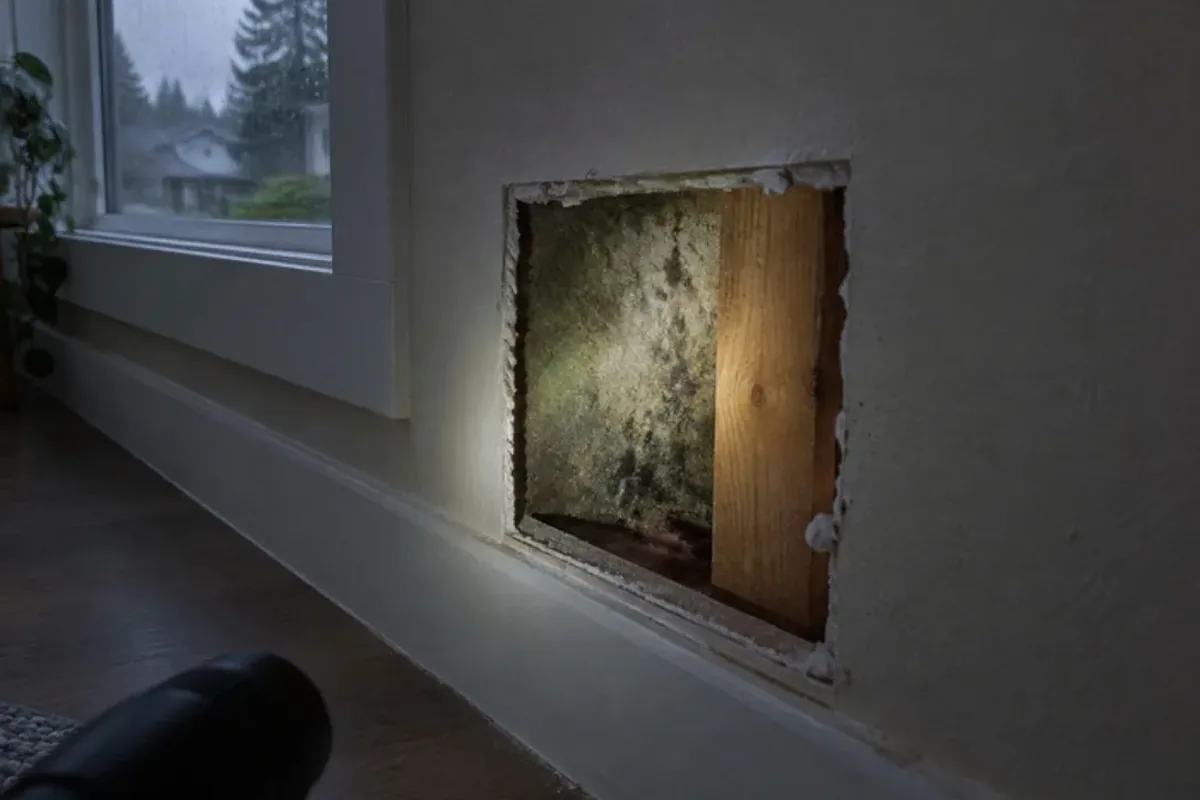
Clues that something is behind the wall
Paint that bubbles or peels, wallpaper seams that lift, drywall that feels soft to a thumb press and baseboards that swell are all hints. So is a musty odor that is strongest in one room. Visible mold is not required for a wall to be wet.
Why walls trap moisture
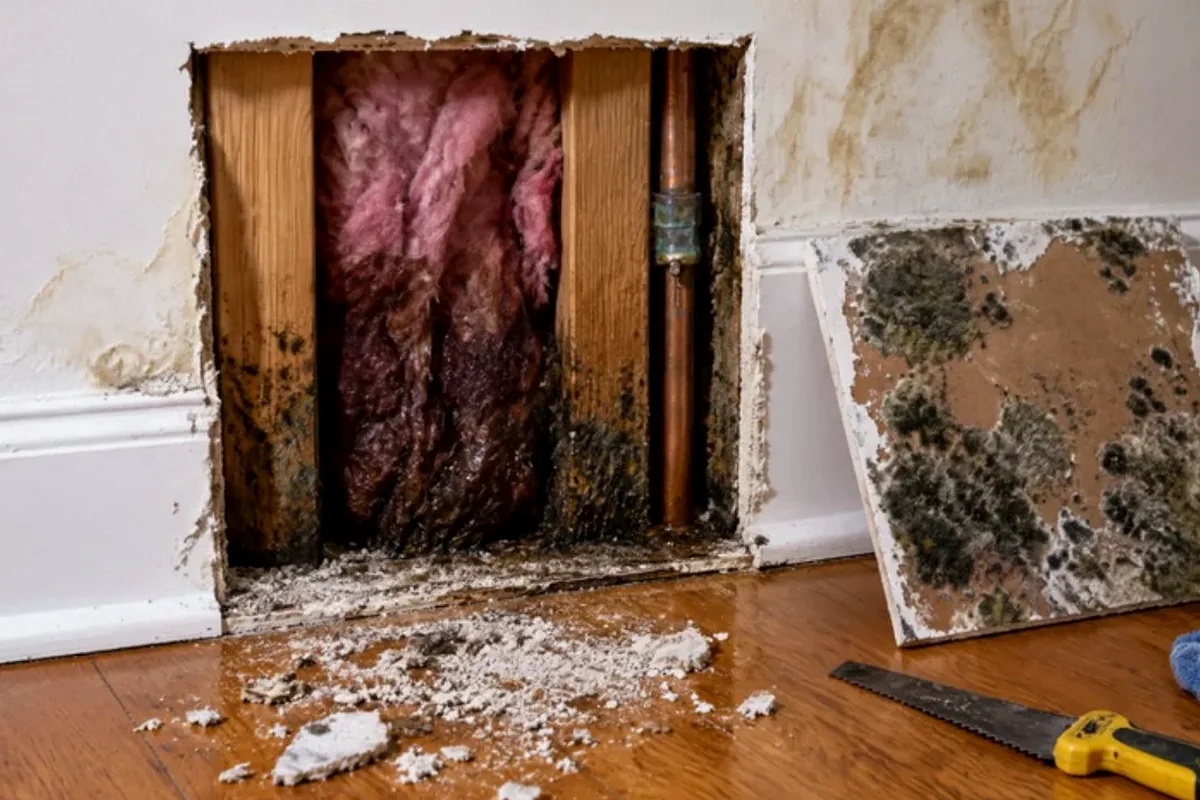
Walls are closed boxes of drywall, insulation and wood. When water enters, it has no easy way out, so wood stays wet and drywall paper becomes a food source. Local humidity slows evaporation, which is why a small leak can become a bigger problem here.
Local facts for a Angier mold job
State public health staff advise asking questions before you pay, checking whether a company belongs to trade groups and follows industry guidelines, and keeping the assessment separate from the cleanup.
Tenants should put leak and mold complaints in writing. North Carolina's landlord statute, G.S. 42-42, covers repairs needed to keep a rental fit to live in.
Once the moldy material is gone, the rebuild is its own step, and some of it, like new ductwork or structural framing, may need sign-off from the local building department.
After heavy Piedmont rain, the NC Flood Risk Information System is the place to check a property's flood zone before talking to the insurance company.
Help is also available nearby in Fuquay-Varina, Willow Spring and Coats.
Large projects and licenses
A full project that reaches $40,000 or more needs a contractor holding a general contractor license from the state. The NCLBGC site has a lookup. For smaller wall repairs, references and a detailed written scope carry more weight than a number alone.
Why containment is used
Opening a wall can release dust and spores into the room. Plastic barriers, a HEPA air scrubber and negative pressure keep that dust where the work is happening. Ask the company to explain how it will protect the rest of the house.
Maintain what keeps water out
Clean gutters, extend downspouts away from the foundation, re-caulk window corners and trim and keep soil below the siding line. Clay soil sheds water poorly, so small drainage fixes outside often do more to protect walls than anything done indoors.
Mold in Walls questions in Angier
Do I have to remove the drywall?
How long does it take for a wall to dry out?
Who rebuilds the wall after removal?
Will insurance cover the wall?
More mold services in Angier
Mold in Walls nearby
Helpful guides
Sources
- N.C. General Statutes 87-1: general contractor license
- NC Licensing Board for General Contractors: consumer FAQ
- NC Division of Public Health: choosing a mold consultant
- N.C. General Statutes 42-42: landlord to provide fit premises
- NC Flood Risk Information System
- EPA: A Brief Guide to Mold, Moisture and Your Home
Last updated: