A moisture meter and a thermal camera can map wet areas without cutting anything, and then a small opening confirms what is inside. That keeps demolition limited to the damaged section. Call the number on this page to be connected with a local mold company in Franklinton.
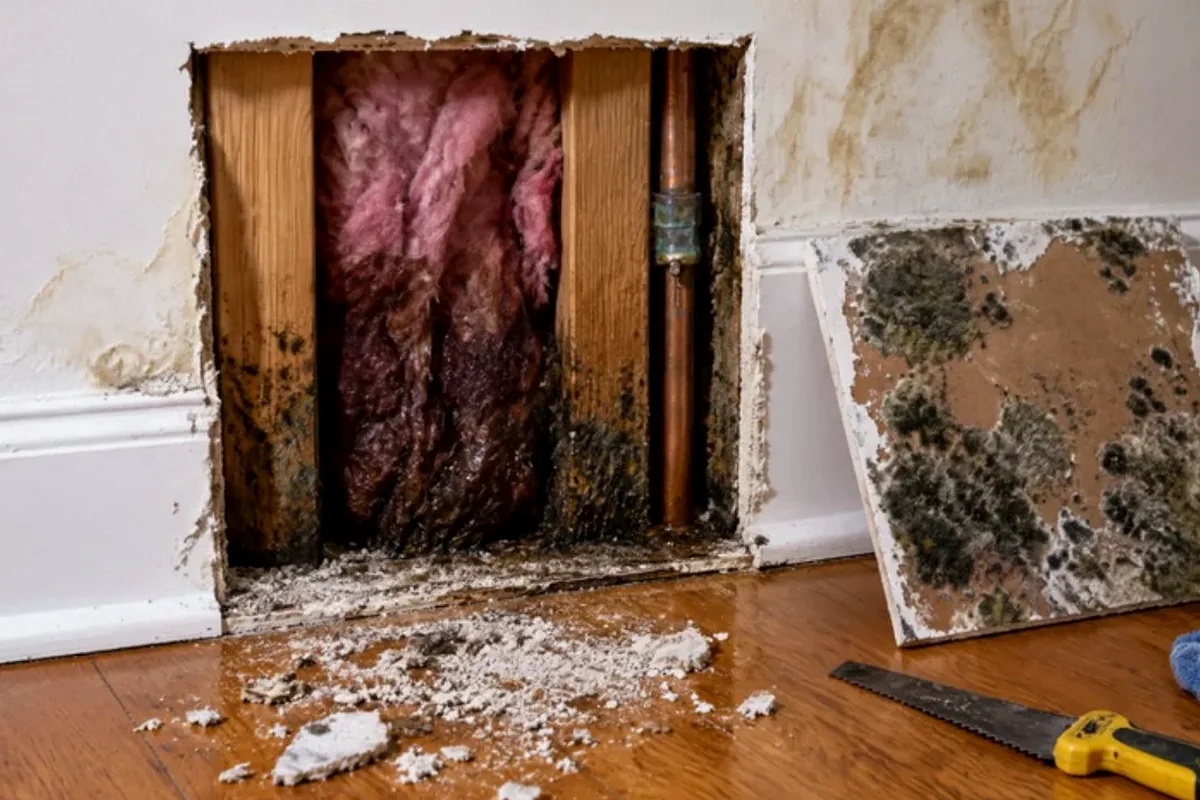
Stains that keep returning
A brown ring that reappears after primer, or a dark patch that creeps back within weeks, tells you the source is still active. Coverings only hide it. The water path has to be found first, then the wall dried, and only then does fresh paint make sense.
Hard freeze damage
An occasional hard freeze can split a pipe in an exterior wall or an unheated chase. The break may stay hidden until the thaw, then soak insulation and drywall for hours. Damp patches that appear after a cold snap deserve a prompt look.
Rural homes often have additions, porches and outbuildings tied into older walls, and the joints between them can leak. A slow roof or well-line leak may soak a wall for months before anyone notices.
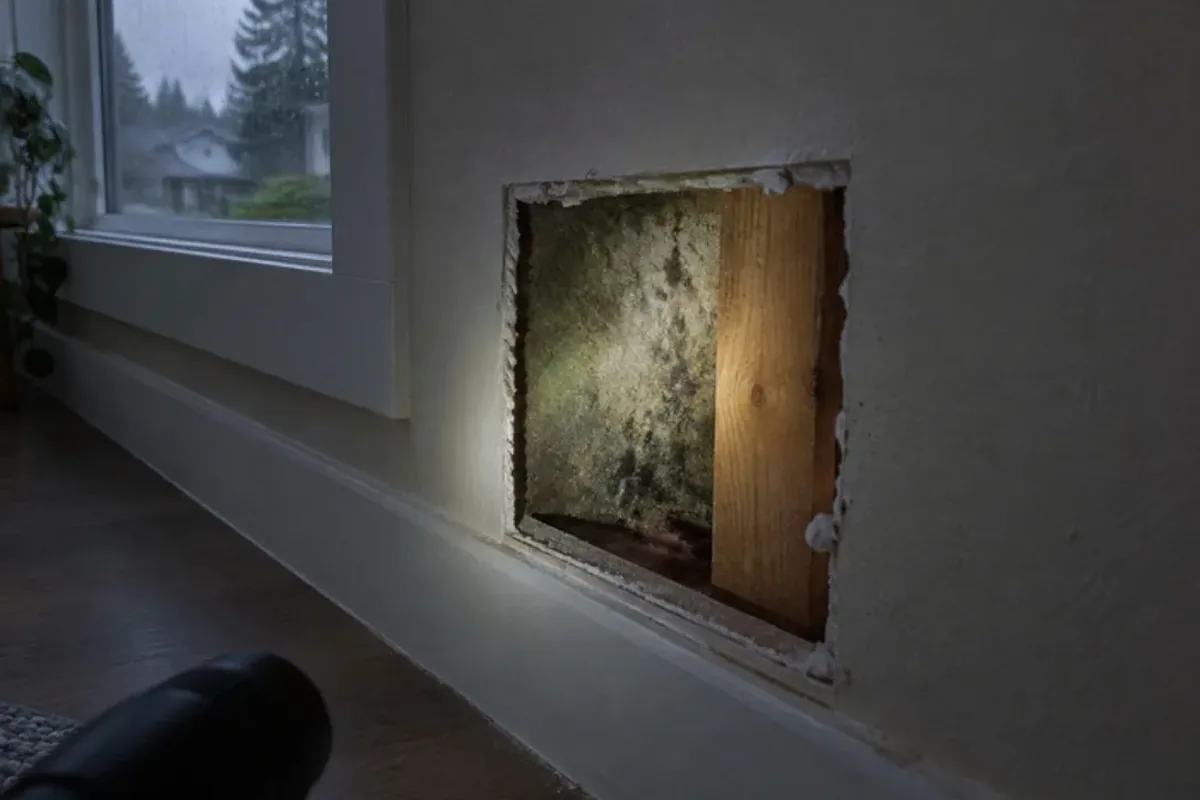
What decides how much it costs
The main drivers are how many wall sections are affected, whether insulation and drywall must come out, and how hard the cavity is to reach. Tile, cabinets and built-ins add work. Finish repairs such as texture and paint are often priced separately.
Questions to ask on the phone
Ask how the company finds the extent of the wetness, how big the openings will be, what happens to the debris and whether it writes up the scope. Also ask whether it does the rebuild or hands off, and how it confirms the wall is dry.
Franklinton permits, rentals and contractor checks
Be wary of anyone who wants air sampling as the very first step. North Carolina's public health guidance warns about exactly that, and suggests asking plenty of questions before you pay.
Tenants should put leak and mold complaints in writing. North Carolina's landlord statute, G.S. 42-42, covers repairs needed to keep a rental fit to live in.
Once the moldy material is gone, the rebuild is its own step, and some of it, like new ductwork or structural framing, may need sign-off from the local building department.
If creek or river water came inside, look the address up in North Carolina's Flood Risk Information System and call your insurer before cleanup begins.
Help is also available nearby in Louisburg, Youngsville and Kittrell.
Maintain what keeps water out
Clean gutters, extend downspouts away from the foundation, re-caulk window corners and trim and keep soil below the siding line. Clay soil sheds water poorly, so small drainage fixes outside often do more to protect walls than anything done indoors.
Mold in Walls questions in Franklinton
Can mold grow behind drywall without showing?
Can I just paint over the stain?
Who rebuilds the wall after removal?
Who pays when a rental wall has mold?
More mold services in Franklinton
Mold in Walls nearby
Helpful guides
Sources
- N.C. General Statutes 87-1: general contractor license
- NC Licensing Board for General Contractors: consumer FAQ
- NC Division of Public Health: choosing a mold consultant
- N.C. General Statutes 42-42: landlord to provide fit premises
- NC Flood Risk Information System
- EPA: A Brief Guide to Mold, Moisture and Your Home
Last updated: