North Carolina rental law expects a landlord to keep the home fit and habitable once the tenant gives written notice. Tenants with a damp, moldy wall should document it in writing. Call the number on this page to be connected with a local mold company in Wake Forest.
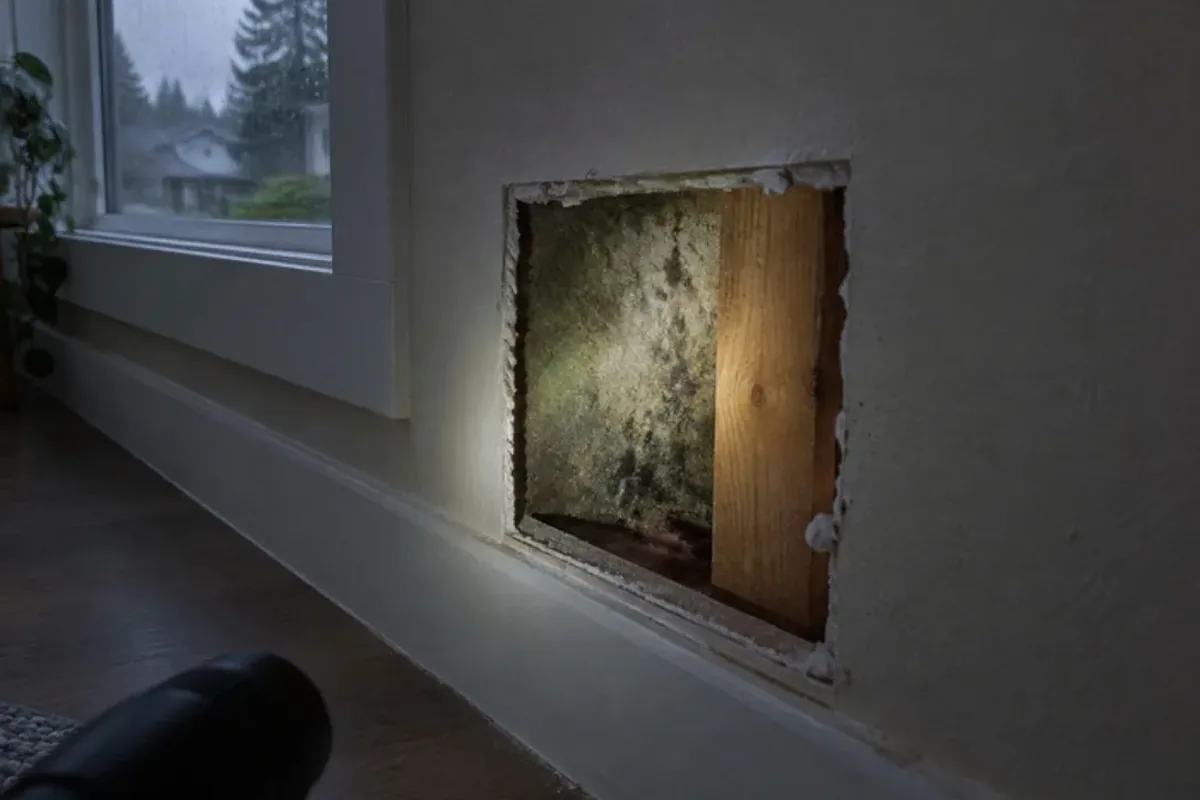
Clues that something is behind the wall
Paint that bubbles or peels, wallpaper seams that lift, drywall that feels soft to a thumb press and baseboards that swell are all hints. So is a musty odor that is strongest in one room. Visible mold is not required for a wall to be wet.
Common sources in Triangle homes
- Pinhole or fitting leaks in supply lines.
- Failed window flashing or caulk.
- Sweating ducts running inside soffits and chases.
- Wet crawl space air wicking up the framing.
A company usually rules out these four before anything else.
Homes near a river, creek or lake often sit on damp ground, so moisture can wick up into lower wall framing and baseboards, especially in low spots and after heavy rain.
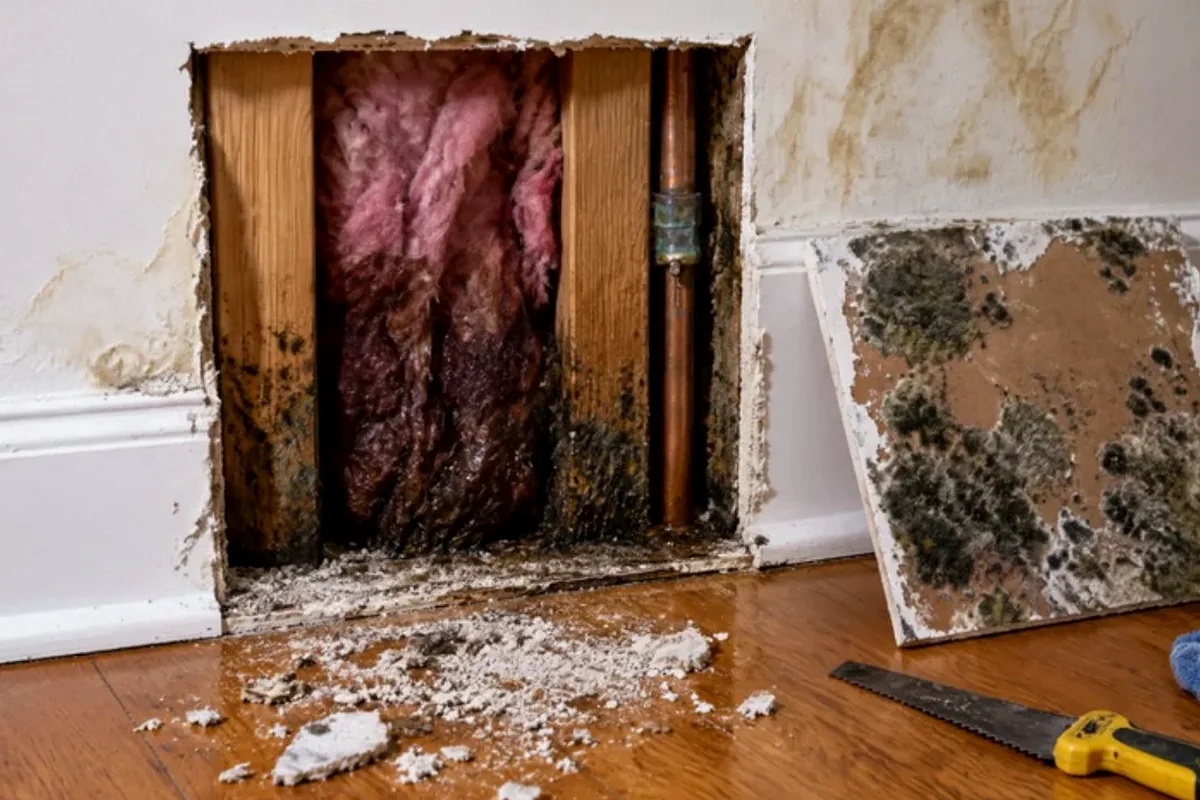
The water repair is a separate cost
Opening a wall for mold does not fix the pipe, window or duct that fed it. A plumber, roofer or HVAC contractor may be needed too. Budgeting for that repair keeps mold from coming back and saves paying for removal twice.
Wake Forest permits, rentals and contractor checks
The NC Division of Public Health suggests not hiring a mold consultant who also sells the remediation, so the person who finds the problem isn't the one paid to fix it.
Renting? N.C.G.S. 42-42 requires landlords to keep a home fit and habitable and to repair supplied plumbing and heating; outside an emergency, send the repair request in writing.
Permits for Wake Forest addresses are handled by the Town of Wake Forest Inspections Department; ask there before load-bearing framing or duct runs are replaced.
After heavy Piedmont rain, the NC Flood Risk Information System is the place to check a property's flood zone before talking to the insurance company.
Help is also available nearby in Youngsville, Rolesville and Franklinton.
How the wall gets handled
- Mark the wet area and set up containment.
- Cut out drywall and insulation that are wet or moldy.
- HEPA vacuum and clean the studs and plates.
- Dry the cavity before anything closes.
Dry it fast
Time matters more than any product. EPA advises drying wet materials within 24 to 48 hours. If a pipe let go or water came in, shut it off, pull baseboards where possible, run fans and a dehumidifier, and call before the wall stays damp for days.
Around Wake Forest
Calls come in from across Wake Forest, including North Main Street historic district, Glen Royall Mill Village, South White Street (downtown).
The Glen Royall Mill Village Historic District has housing built starting in 1900, so older wood-frame stock sits in the town core.
Mold in Walls questions in Wake Forest
How do I know if there is mold inside my wall?
Does North Carolina require a license for wall mold removal?
Do I need to leave while the wall is open?
Can storm water cause mold inside walls?
More mold services in Wake Forest
Mold in Walls nearby
Helpful guides
Sources
- Town of Wake Forest Inspections Department
- Wake County Permits and Inspections: flood information
- N.C. General Statutes 87-1: general contractor license
- NC Licensing Board for General Contractors: consumer FAQ
- NC Division of Public Health: choosing a mold consultant
- N.C. General Statutes 42-42: landlord to provide fit premises
- NC Flood Risk Information System
Last updated: