Wet or moldy insulation generally has to be removed, while sound rafters and decking are often cleaned in place. EPA advises drying wet materials within 24 to 48 hours. Call the number on this page to be connected with a local mold company in Louisburg.
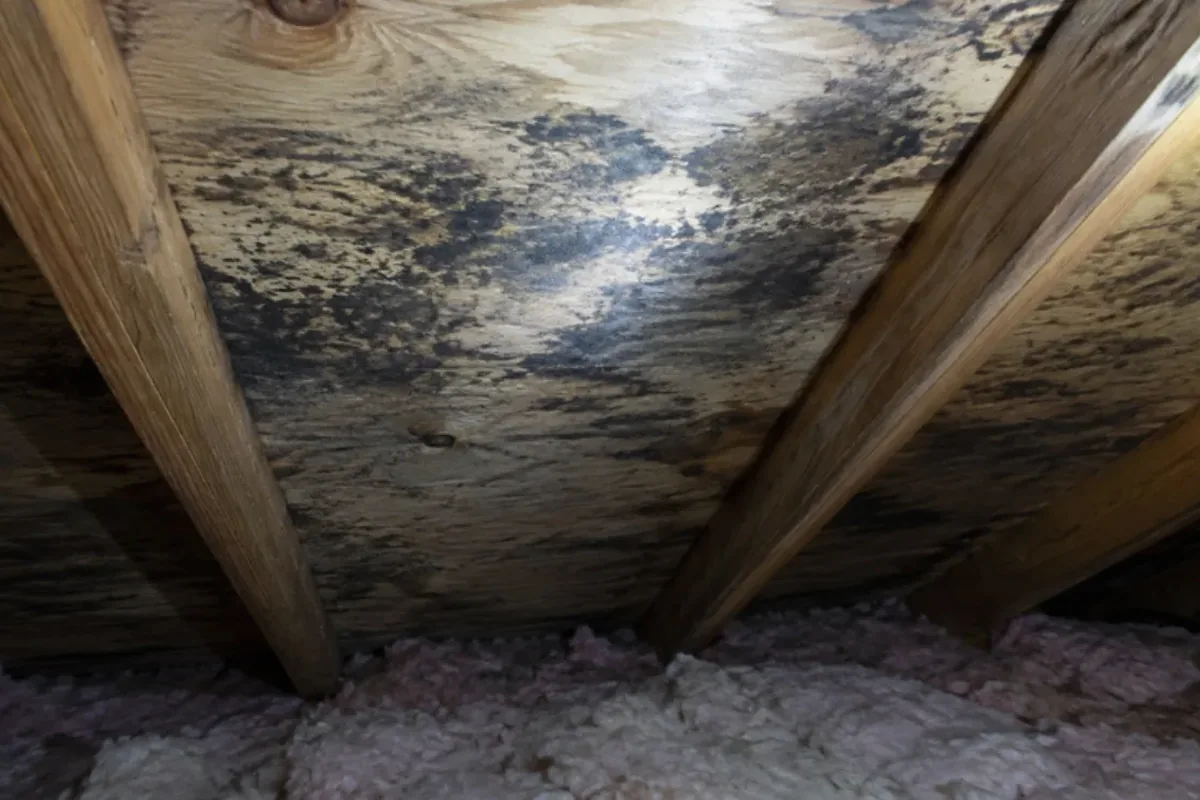
Is It Mold or Just Old Staining?
Plywood darkens with age, and dried leak marks can look much like growth. EPA says testing usually is not needed when mold is visible. What matters more is whether the wood is still damp and where the moisture enters.
Poor Ventilation
Attics need air moving between soffit and ridge. When insulation blocks the soffit vents or the ridge is closed off, humid air lingers under the deck and the wood stays damp. Adding or clearing vents is a common part of the fix, and it costs little next to repeated cleanups.
Louisburg permits, rentals and contractor checks
Be wary of anyone who wants air sampling as the very first step. North Carolina's public health guidance warns about exactly that, and suggests asking plenty of questions before you pay.
Tenants should put leak and mold complaints in writing. North Carolina's landlord statute, G.S. 42-42, covers repairs needed to keep a rental fit to live in.
Once the moldy material is gone, the rebuild is its own step, and some of it, like new ductwork or structural framing, may need sign-off from the local building department.
If creek or river water came inside, look the address up in North Carolina's Flood Risk Information System and call your insurer before cleanup begins.
Help is also available nearby in Franklinton, Bunn and Youngsville.
Roofing Is Often Separate
A mold company cleans the attic, but a leaking roof usually needs a roofer, and the two trades bill separately. Getting both done in the right order matters, since fresh insulation under a leaking valley soon gets wet again. Ask whether the company coordinates with roofers or leaves that to you.
Time on the Job
A small attic with limited growth can wrap up in a day or so. Large attics, heavy insulation loads or work that includes ventilation changes can run longer. Heat limits working hours in summer, so many crews start early and take breaks, which is worth asking about when you set a schedule.
A Twice-Yearly Look Overhead
- Spring: check for winter roof leaks
- Summer: look at ducts and the air handler pan
- Fall: clear soffit vents of insulation
- After storms: scan the deck and ceiling spots
Attic Mold Removal questions in Louisburg
What causes mold in an attic?
Why does my attic stay damp in summer?
Who pays if I rent?
Should I use bleach?
More mold services in Louisburg
Attic Mold Removal nearby
Helpful guides
Sources
- N.C. General Statutes 87-1: general contractor license
- NC Licensing Board for General Contractors: consumer FAQ
- NC Division of Public Health: choosing a mold consultant
- N.C. General Statutes 42-42: landlord to provide fit premises
- NC Flood Risk Information System
- EPA: A Brief Guide to Mold, Moisture and Your Home
Last updated: