Who pays depends on the lease and the cause. Many leases assign repairs to the landlord and interior finishes to the tenant, and insurers treat sudden leaks differently from slow ones. Read the lease, send notice in writing and call your agent early. Call the number on this page to be connected with a local mold company in Louisburg.

Signs a building has a moisture problem
Look for stained or sagging ceiling tiles, peeling paint, a damp smell in a storeroom or restroom, warped baseboards and fuzzy spots on walls behind shelving. Complaints from several people about the same odor in the same corner are a strong clue.
Storms and standing water
Heavy rain and tropical remnants push water through roofs, doors, loading docks and low parking areas, and creeks near Franklinton can rise onto ground-level space. After a wet week, check carpets, baseboards and storage on the lowest floor, even if nothing looks wet.
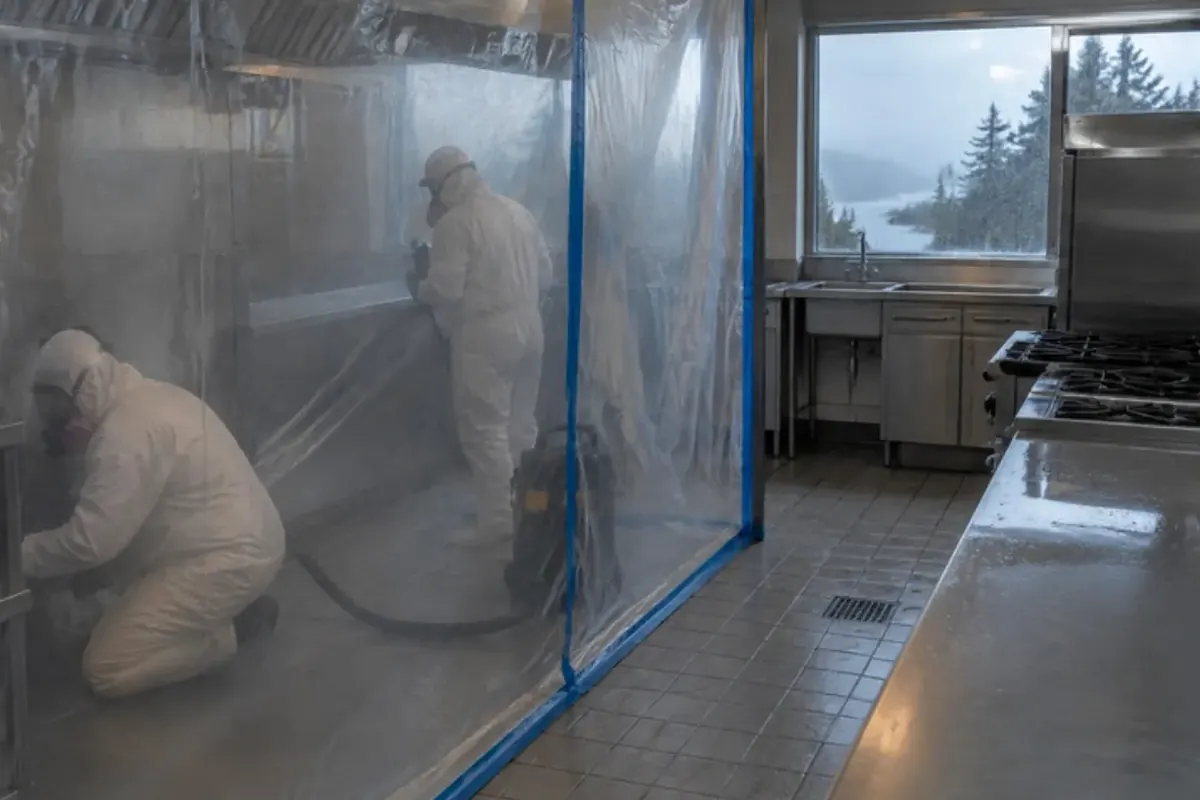
Rules and offices for Louisburg mold jobs
There are no federal rules for indoor air quality consultants, so references, written scopes and a separate assessor matter. Contractor license rules start at $40,000 in North Carolina.
Renting? N.C.G.S. 42-42 requires landlords to keep a home fit and habitable and to repair supplied plumbing and heating; outside an emergency, send the repair request in writing.
Permits for Louisburg addresses are handled by the local building department; ask there before load-bearing framing or duct runs are replaced.
If creek or river water came inside, look the address up in North Carolina's Flood Risk Information System and call your insurer before cleanup begins.
Many of the same companies also take calls from Franklinton, Bunn and Youngsville.
What shapes a commercial quote
Square footage affected comes first, then how many materials must be removed, how much containment is required, whether the work happens at night, and how long the rebuild takes. Pricing in a vacant warehouse differs a lot from an occupied clinic.
Final documents to request
Ask for a closing report listing the areas treated, materials removed, equipment used and moisture readings at the end. Clearance testing may be wanted by a lender, insurer or tenant, and having a written record makes later conversations simpler.
Keep humidity in range
EPA suggests indoor humidity below about 60 percent, ideally 30 to 50. Place a few data loggers or hygrometers in storerooms and corners, and look at readings during humid weeks. Dehumidifiers and HVAC adjustments can bring a space back into range, and storerooms usually need the most attention.
Commercial Mold Remediation questions in Louisburg
Who pays, the landlord or the tenant?
Do apartment common areas count as commercial work?
What documents should I keep?
Is Louisburg building permit paperwork needed?
More mold services in Louisburg
Commercial Mold Remediation nearby
Helpful guides
Sources
- N.C. General Statutes 87-1: general contractor license
- NC Licensing Board for General Contractors: consumer FAQ
- NC Division of Public Health: choosing a mold consultant
- N.C. General Statutes 42-42: landlord to provide fit premises
- NC Flood Risk Information System
- EPA: A Brief Guide to Mold, Moisture and Your Home
Last updated: