In the Triangle, mold most often traces to crawl space moisture, roof or plumbing leaks, AC condensate trouble and long humid summers. A company can inspect, test, remove and verify. Call the number on this page to be connected with a local mold company in Smithfield.
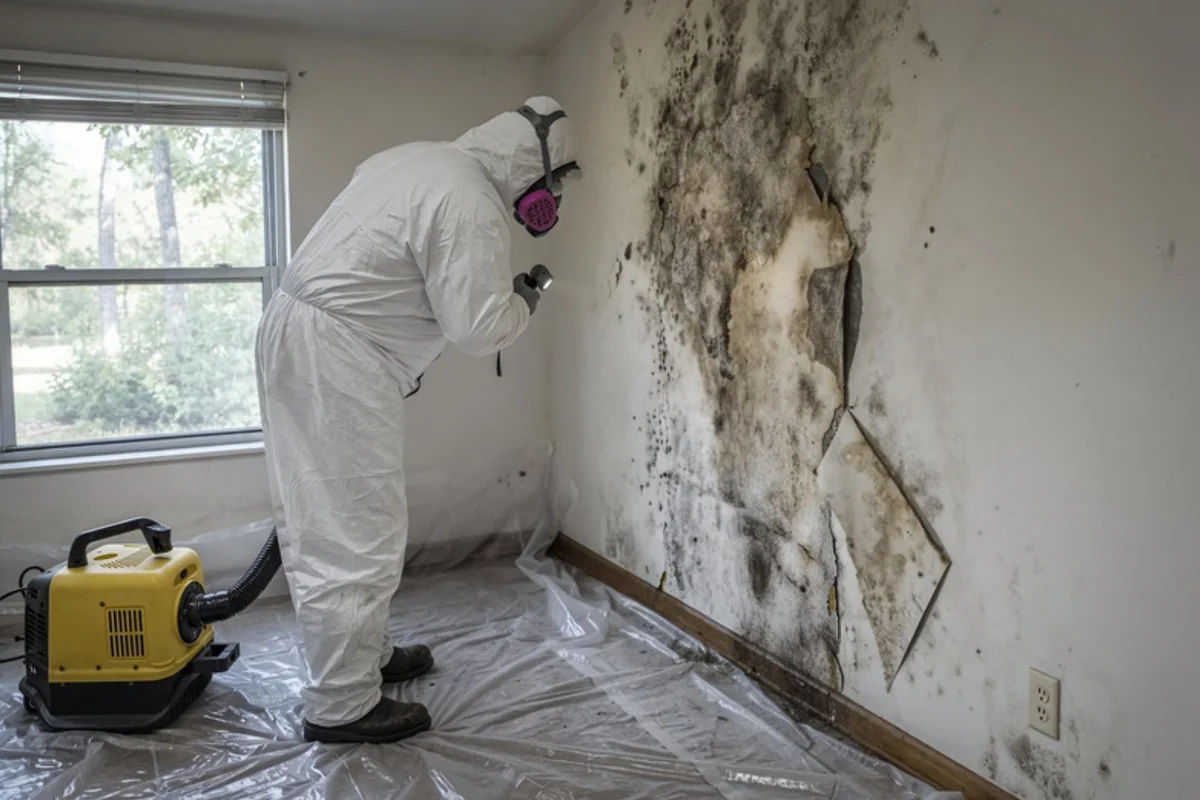
Mold services in Smithfield
Mop and sponge, or professional?
A thin film on a tile joint or a sill is the sort of thing a homeowner can wipe off, and EPA draws that line near 10 square feet once the leak is repaired. Anything inside a wall cavity, beneath floors or left by floodwater needs trained hands, and one call settles which case yours is.
Attics and roof leaks
A small flashing gap, a failed vent boot or a bath fan venting into the attic can dampen sheathing for months. Hot, seldom-visited spaces let growth spread unseen. If you spot dark patches from the hatch, a company can scope the area before the ceiling below shows it.
Close to low ground along creeks, Smithfield properties can take on water quickly after a downpour. Drying fast and keeping the AC running help keep mold from taking hold.
If water is still arriving
Shut off the supply or divert the flow when that is safe, then start drying right away; EPA advises getting wet materials dry within 24 to 48 hours. Phone afterward so a company can tell you whether fans, a moisture check or both are worthwhile. Anyone in danger should call emergency services before anything else.
Who to check with in Smithfield
For a big tear-out and rebuild, look the company up on the NC Licensing Board for General Contractors site; its search works by name, number or county, and a license is required at $40,000 and up.
Renting? N.C.G.S. 42-42 requires landlords to keep a home fit and habitable and to repair supplied plumbing and heating; outside an emergency, send the repair request in writing.
Permits for Smithfield addresses are handled by Johnston County Building Inspections; ask there before load-bearing framing or duct runs are replaced.
If creek or river water came inside, look the address up in North Carolina's Flood Risk Information System and call your insurer before cleanup begins.
Help is also available nearby in Selma, Four Oaks and Clayton.
Keep the roles apart
The state's public health advice is not to hire a consultant who also does the removal on the same project. An independent inspector gives you a view that has no stake in selling you work. If one outfit offers both, ask how it handles that conflict and who would sign off on the finished work.
Situations that cannot wait
- A patch larger than a doormat, roughly 10 square feet
- Dampness left by flood or sewage water
- An odor you cannot trace
- Spots on registers or the air handler
- Drywall or ceilings still wet days later
Take dated photos for the company and your insurer. See your doctor about any health concerns.
Common questions in Smithfield
What does mold removal involve in North Carolina?
Should I get mold testing or just an inspection?
Can mold grow in my AC or ducts?
Is a damp crawl space a mold problem?
Nearby cities and towns
Sources
- Johnston County Building Inspections Department
- Johnston County Building Inspections Department: flood information
- N.C. General Statutes 87-1: general contractor license
- NC Licensing Board for General Contractors: consumer FAQ
- NC Division of Public Health: choosing a mold consultant
- N.C. General Statutes 42-42: landlord to provide fit premises
- NC Flood Risk Information System
Last updated: