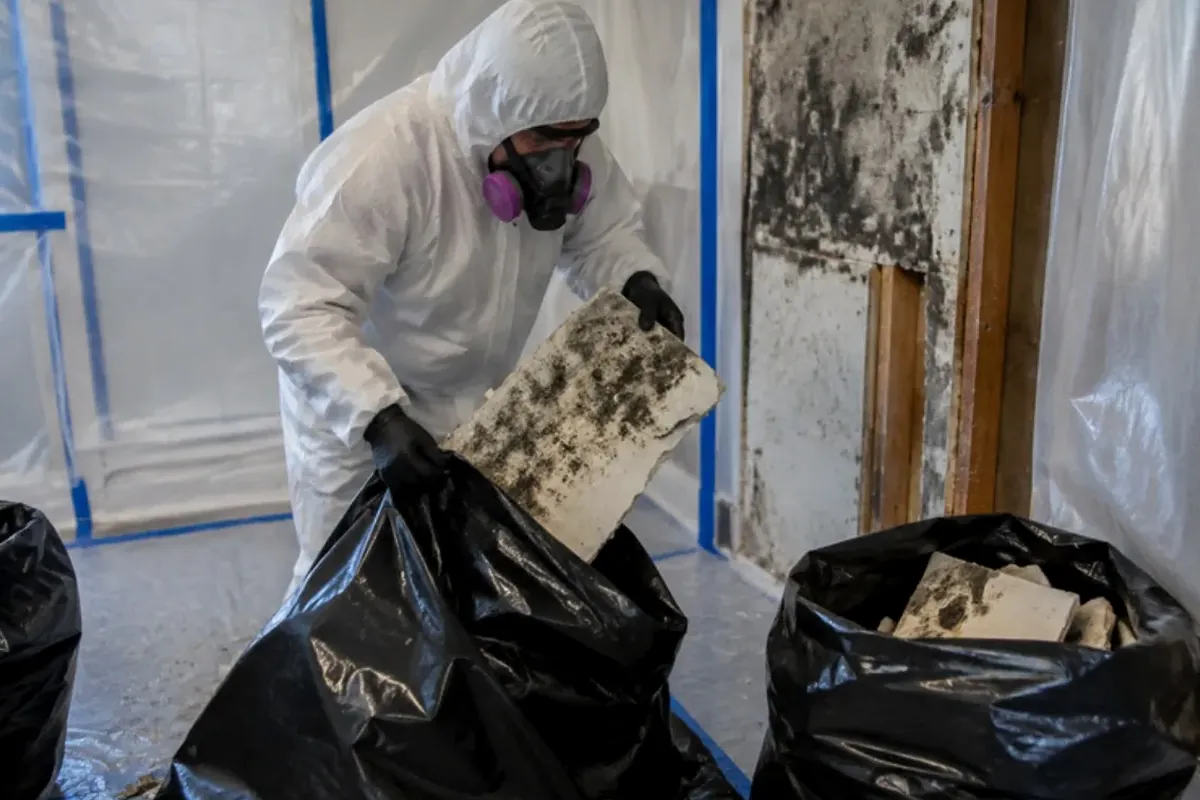
Proper removal isolates the room, filters the air, cuts out porous material that stayed wet and cleans what can be saved. Bleach is not the main tool. Call the number on this page to be connected with a local mold company in Coats.
Does the color matter?
Less than most people think. Plenty of molds look dark, and some dark smudges turn out to be dust or soot. Only a trained assessor, sometimes with a lab sample, can say more. For planning the response, size, moisture source and material count far more than hue.
Common causes in Triangle homes
- Clogged AC condensate drain or overflowing pan.
- Roof or flashing leaks reaching the attic.
- Plumbing leaks inside walls.
- Wet crawl space air rising into the house.
Most dark growth traces to one of these four, so a company checks them before opening anything.
Out in the country, a well pump room, a detached shop or an unused guest room can sit damp for months. Dark mold in those spaces often goes unnoticed until the smell gets strong.
Getting a clear estimate
Ask the company to walk the whole affected area, point to moisture readings and put the scope in writing. A line-by-line estimate makes it easier to compare bids here and to spot anything that is missing, such as clearance checks or haul-away.
Rules and offices for Coats mold jobs
Home repair complaints in North Carolina can go to the Department of Justice consumer protection line, 1-877-5-NO-SCAM. Settle the scope in writing first so there is something to point to.
In a rental, written notice to the landlord starts the clock under state law, which requires repairs that keep the unit in a fit and habitable condition.
Once the moldy material is gone, the rebuild is its own step, and some of it, like new ductwork or structural framing, may need sign-off from the local building department.
If creek or river water came inside, look the address up in North Carolina's Flood Risk Information System and call your insurer before cleanup begins.
Help is also available nearby in Fuquay-Varina, Angier and Willow Spring.
The removal steps
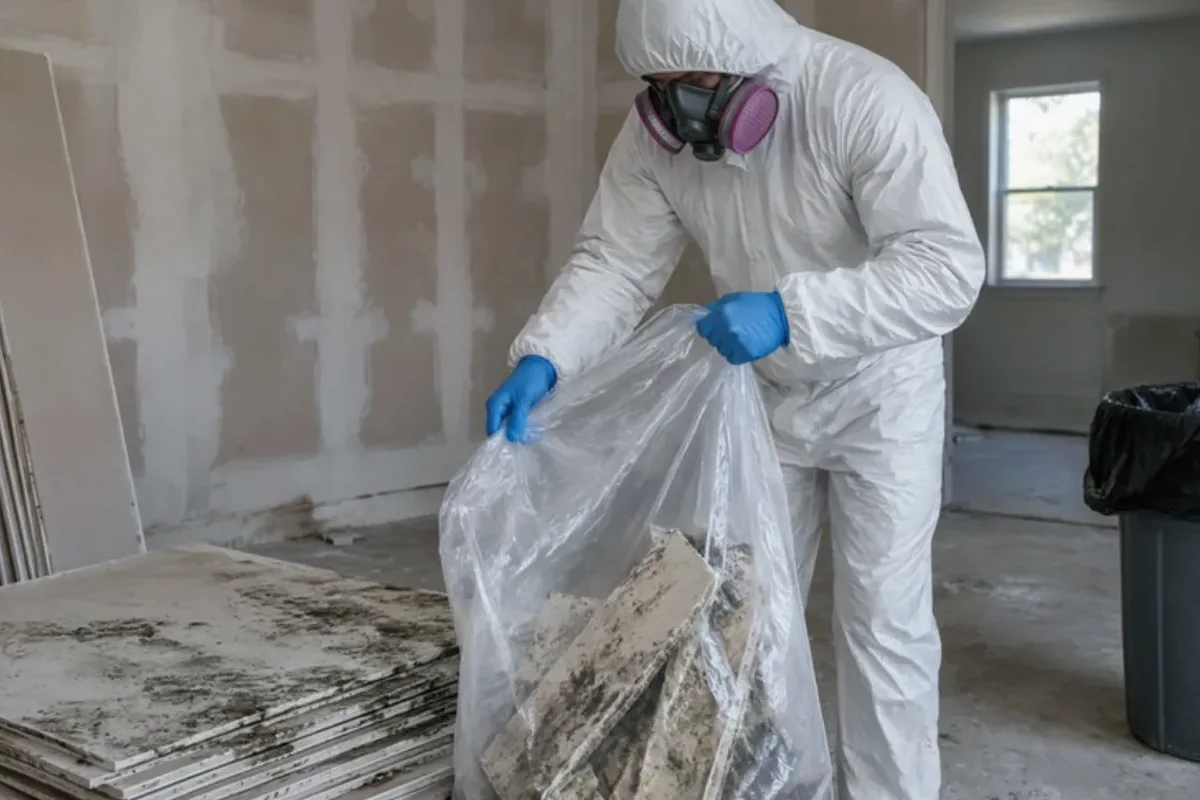
- Seal and filter the work area.
- Bag and remove porous material that stayed moldy.
- HEPA vacuum and damp-wipe what can be saved.
- Dry the space and confirm moisture readings.
The order matters because it keeps debris from settling back.
Watch the problem spots
Look in the same places every few months: under sinks, behind toilets, around the water heater and at the corners of top-floor ceilings. Catching a damp patch while it is still small keeps a short repair from turning into a wall-opening job.
Black Mold Removal questions in Coats
Does North Carolina require a mold license?
Will removal mean tearing out drywall?
Why does black mold keep coming back?
How can I find a trustworthy company?
More mold services in Coats
Black Mold Removal nearby
Helpful guides
Sources
- N.C. General Statutes 87-1: general contractor license
- NC Licensing Board for General Contractors: consumer FAQ
- NC Division of Public Health: choosing a mold consultant
- N.C. General Statutes 42-42: landlord to provide fit premises
- NC Flood Risk Information System
- EPA: A Brief Guide to Mold, Moisture and Your Home
Last updated: