Mold on a flooded home's walls and floors is rarely a do-it-yourself job when the water was deep or sat for days. EPA says small surface patches under about 10 square feet are manageable. Call the number on this page to be connected with a local mold company in Coats.
When the job is bigger than a mop
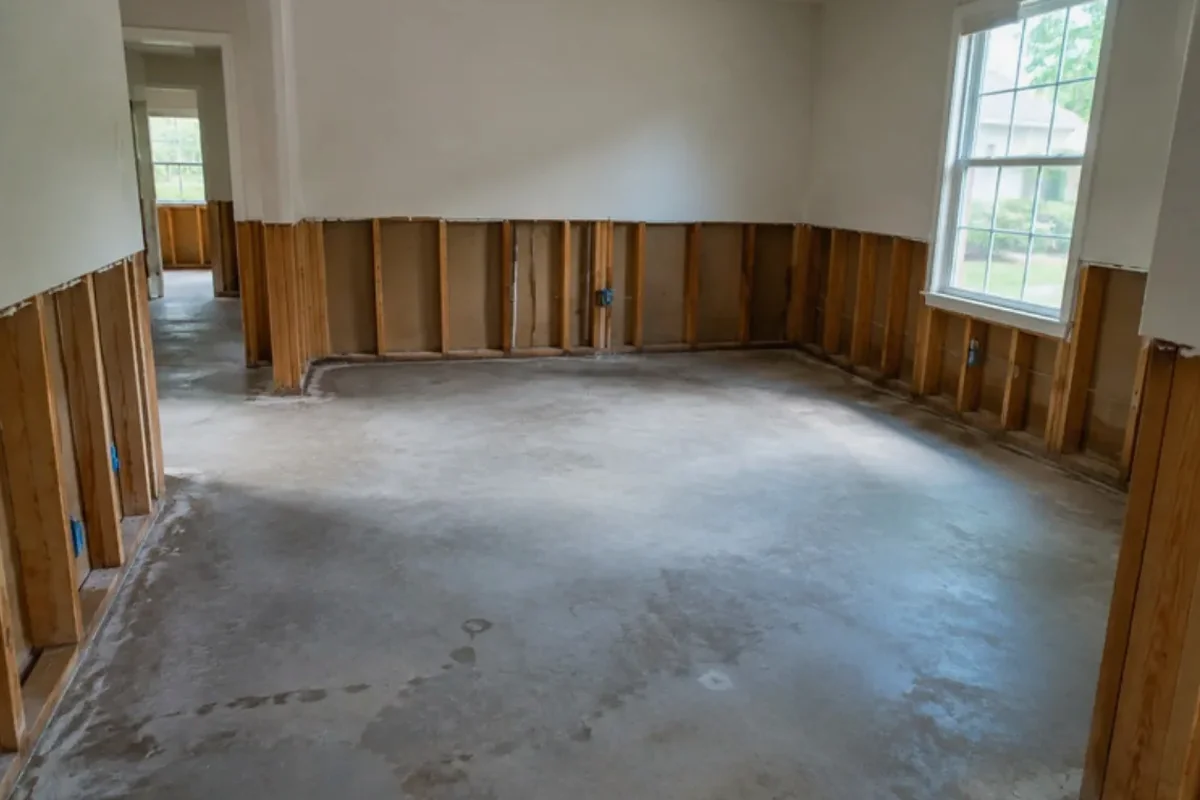
If water stood more than a day, rose above the baseboards, or reached the crawl space insulation, the damage typically exceeds what a homeowner can handle. EPA's rule of thumb for cleaning it yourself is a patch under roughly 10 square feet.
Lakes, ponds and stormwater basins
Falls Lake, Jordan Lake and neighborhood retention ponds absorb a lot of rain, but when they fill, nearby low spots back up. Storm drains that cannot keep up can also send water into yards and garages during intense downpours. Water pooled on a parking pad can enter that way too.
Rural properties with large lots, drainage ditches and older outbuildings often take on storm water in more than one structure, so check the house, the well house and any barn or shop.
Access and house type
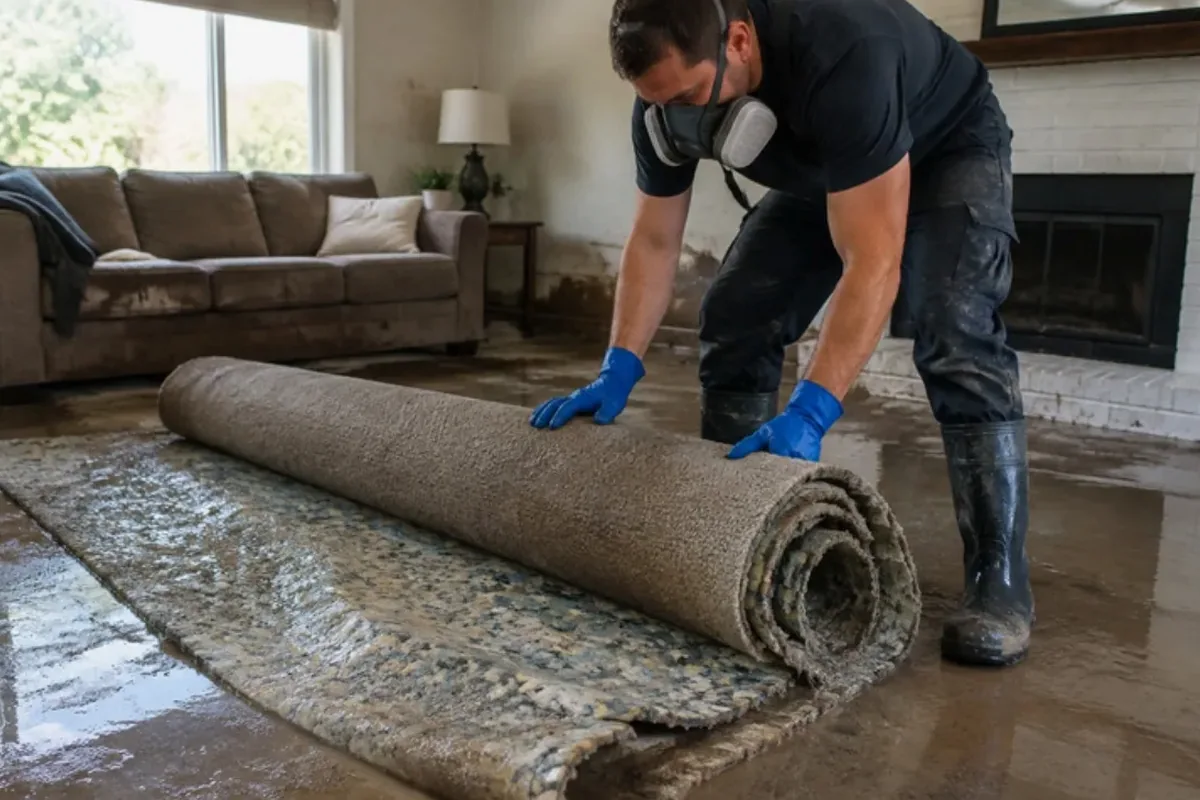
A crawl space with room to work costs less to clean than one with ducts, pipes and tight corners. Finished walk-out lower levels, tile, built-ins and cabinets also raise the work because each must come apart before it can dry. Tight spaces mean slower, harder work.
Rules and offices for Coats mold jobs
North Carolina ties larger jobs to the general contractor license: under G.S. 87-1, a project costing $40,000 or more needs a contractor holding a license from the NC Licensing Board for General Contractors.
Renting? N.C.G.S. 42-42 requires landlords to keep a home fit and habitable and to repair supplied plumbing and heating; outside an emergency, send the repair request in writing.
Cleanup on its own rarely needs a permit. Replacing framing, wiring, ductwork or plumbing afterward can, and the local building department can tell you what applies.
If creek or river water came inside, look the address up in North Carolina's Flood Risk Information System and call your insurer before cleanup begins.
Many of the same companies also take calls from Fuquay-Varina, Angier and Willow Spring.
Containment and safety gear
Where mold is growing, the work area is sealed with plastic, negative air keeps spores from drifting and workers wear respirators. Expect closed vents and a bit of noise. Those steps protect the unaffected parts of the house while cleaning goes on. Containment keeps clean rooms clean.
Why waiting hurts
Every day wet materials stay wet raises the chance that mold takes hold, and the material that could have been dried becomes material that must be removed. Quick action after a flood is the most effective protection you have. Clear scopes avoid arguments once the walls are open.
Storm & Flood Mold Removal questions in Coats
Is floodwater treated differently from a pipe leak?
How do I know if the crawl space is the problem?
Is it safe to stay in the house?
Where do I find out if my house is in a flood zone?
More mold services in Coats
Storm & Flood Mold Removal nearby
Helpful guides
Sources
- N.C. General Statutes 87-1: general contractor license
- NC Licensing Board for General Contractors: consumer FAQ
- NC Division of Public Health: choosing a mold consultant
- N.C. General Statutes 42-42: landlord to provide fit premises
- NC Flood Risk Information System
- EPA: A Brief Guide to Mold, Moisture and Your Home
Last updated: