EPA advises drying wet building materials within 24 to 48 hours. A wall that stayed damp longer than that often has growth on the back of the drywall, even when the front looks clean. Call the number on this page to be connected with a local mold company in Middlesex.
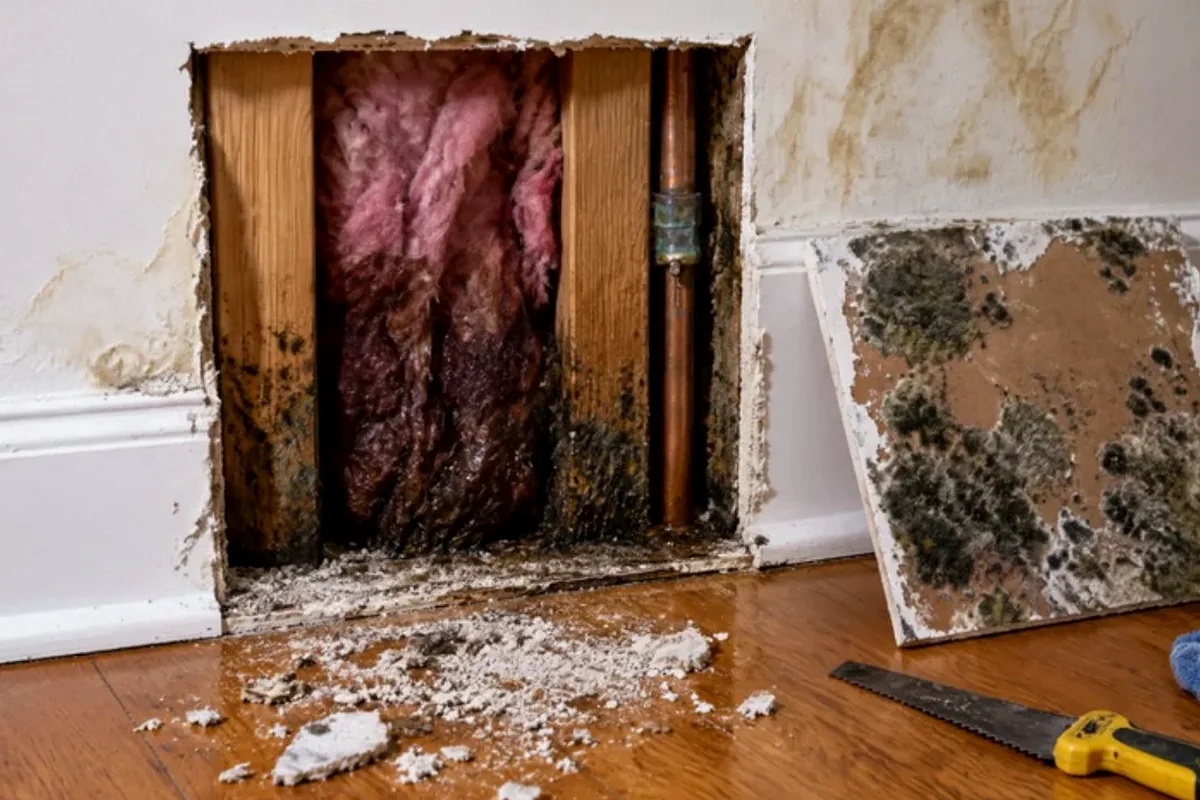
Clues that something is behind the wall
Paint that bubbles or peels, wallpaper seams that lift, drywall that feels soft to a thumb press and baseboards that swell are all hints. So is a musty odor that is strongest in one room. Visible mold is not required for a wall to be wet.
Plumbing inside the wall
Supply lines, drain connections and shower valves hide behind drywall. A slow weep from a fitting can soak insulation for months. The first sign may be a stain at the baseboard below or a dehumidifier that never seems to catch up.
Rural homes often have additions, porches and outbuildings tied into older walls, and the joints between them can leak. A slow roof or well-line leak may soak a wall for months before anyone notices.
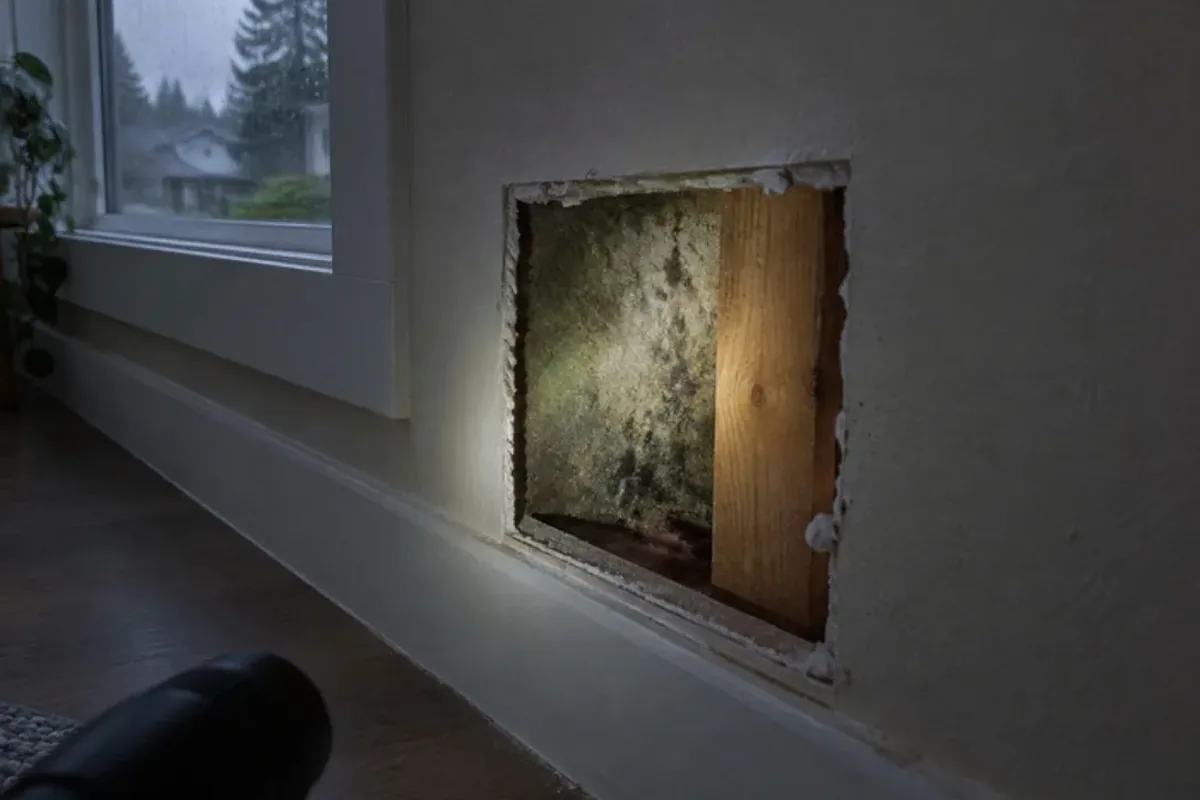
The water repair is a separate cost
Opening a wall for mold does not fix the pipe, window or duct that fed it. A plumber, roofer or HVAC contractor may be needed too. Budgeting for that repair keeps mold from coming back and saves paying for removal twice.
Before the wall is closed
Ask for moisture readings that show the studs are dry, and take photos of the open cavity. Closing a wall too early traps leftover dampness. Some homeowners add a clearance check by a separate assessor before the drywall goes back up.
Keep humidity down
Use bath fans during showers, run the kitchen hood while cooking and keep a hygrometer in the muggiest rooms. EPA suggests keeping indoor humidity below about 60 percent, ideally 30 to 50. Moving furniture a few inches off exterior walls helps air circulate.
Local facts for a Middlesex mold job
For a big tear-out and rebuild, look the company up on the NC Licensing Board for General Contractors site; its search works by name, number or county, and a license is required at $40,000 and up.
Tenants should put leak and mold complaints in writing. North Carolina's landlord statute, G.S. 42-42, covers repairs needed to keep a rental fit to live in.
Cleanup on its own rarely needs a permit. Replacing framing, wiring, ductwork or plumbing afterward can, and the local building department can tell you what applies.
After heavy Piedmont rain, the NC Flood Risk Information System is the place to check a property's flood zone before talking to the insurance company.
Callers here are often matched with companies that work in Zebulon, Bailey and Wendell as well.
Mold in Walls questions in Middlesex
Can mold grow behind drywall without showing?
Is it safe to cut open the wall myself?
How long does it take for a wall to dry out?
Do I need to leave while the wall is open?
More mold services in Middlesex
Mold in Walls nearby
Helpful guides
Sources
- N.C. General Statutes 87-1: general contractor license
- NC Licensing Board for General Contractors: consumer FAQ
- NC Division of Public Health: choosing a mold consultant
- N.C. General Statutes 42-42: landlord to provide fit premises
- NC Flood Risk Information System
- EPA: A Brief Guide to Mold, Moisture and Your Home
Last updated: