EPA says many homeowners can clean a patch of surface mold smaller than about 10 square feet. A burst pipe that wets a whole wall or ceiling usually exceeds that quickly and calls for a company. Call the number on this page to be connected with a local mold company in Moncure.
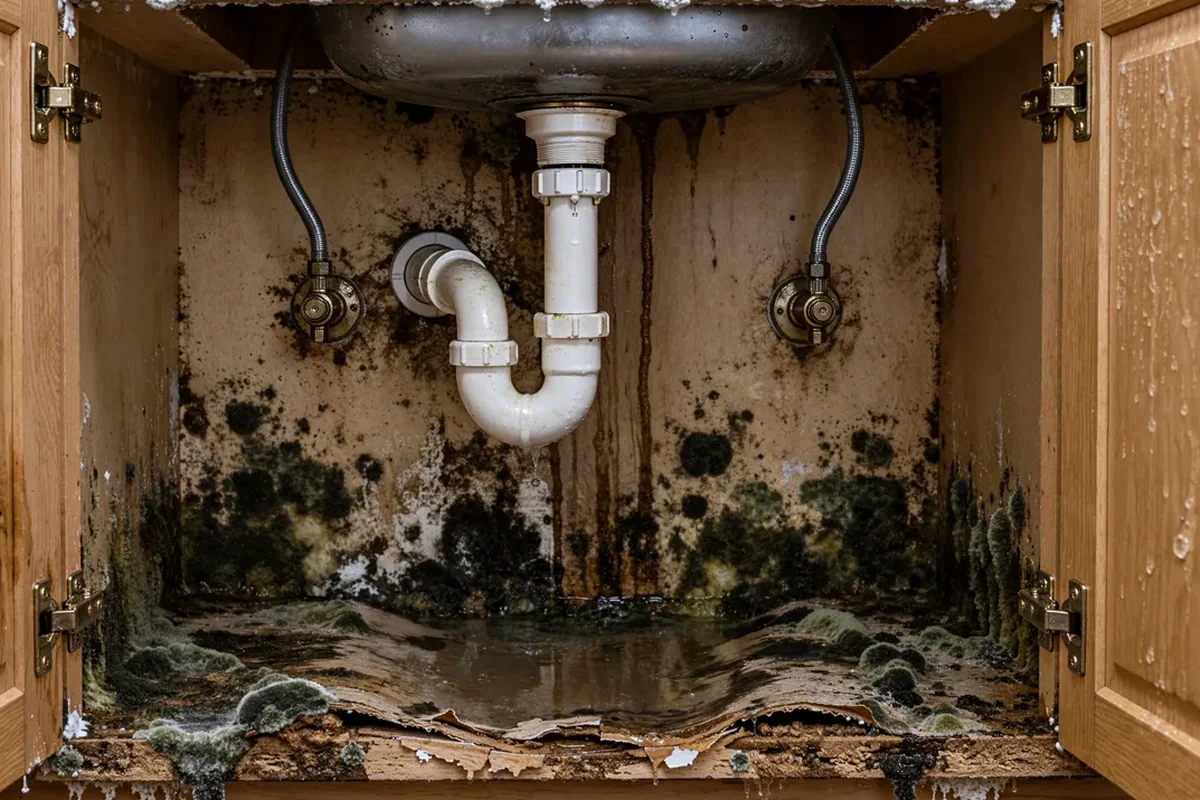
Reasons to call sooner rather than later
Call if the wet area is larger than a doormat, if insulation or carpet pad got soaked, if two days have passed without full drying, or if you simply cannot find where the water went. A local company can trace moisture with meters instead of guesswork.
Where the water travels
Water follows framing. A leak above a ceiling can run along joists and show up in a different room, while a slab leak wets the base of walls. Tracing the true source in a Chatham County home often takes moisture meters and patience. Stains far from the pipe are common.
Homes near a river, creek or lake sit on damp ground, so after a plumbing leak the soil and crawl space add moisture to what the pipe released, slowing the drying that follows.
Rural homes on wells and private lines often have long pipe runs to outbuildings and well houses, so a leak can go unseen for days before pressure drops or a stain appears.
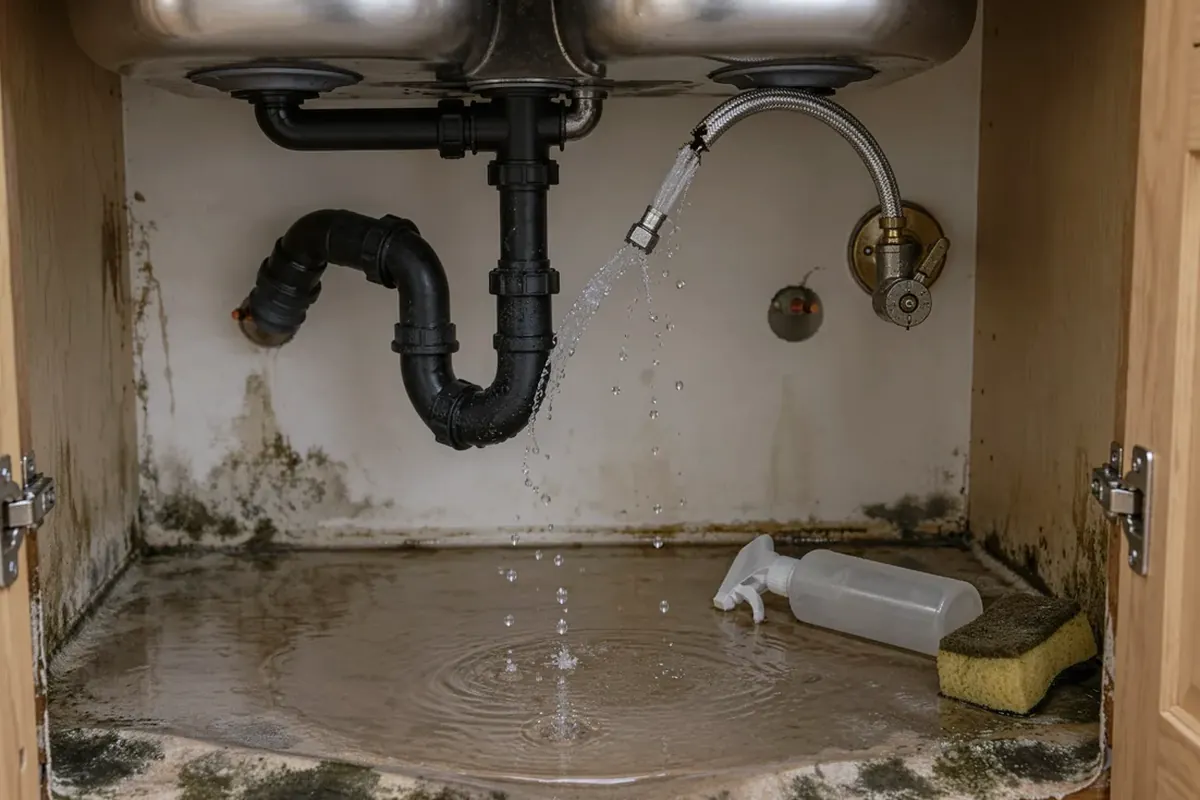
How to compare bids sensibly
Get at least two written scopes. Look for named rooms, stated moisture readings, a drying plan and clear exclusions. A bid that is just a lump number with no detail gives you nothing to hold anyone to if the job grows. Questions are fair; vague answers are a warning.
Before you hire in Moncure
Home repair complaints in North Carolina can go to the Department of Justice consumer protection line, 1-877-5-NO-SCAM. Settle the scope in writing first so there is something to point to.
Renting? N.C.G.S. 42-42 requires landlords to keep a home fit and habitable and to repair supplied plumbing and heating; outside an emergency, send the repair request in writing.
Under G.S. 160D-1110, many repairs of $40,000 or less in a house need no permit, but structural, plumbing, electrical and HVAC changes do. Check with Chatham County Central Permitting & Inspections.
After heavy Piedmont rain, the NC Flood Risk Information System is the place to check a property's flood zone before talking to the insurance company.
Callers here are often matched with companies that work in Holly Springs, New Hill and Apex as well.
Clearance and next steps
After removal and drying, some homeowners ask for follow-up testing by an independent party to confirm the area is ready for rebuilding. North Carolina public health guidance advises keeping the tester separate from the company doing the work. Results are usually reviewed before drywall, trim and paint go back.
Keep indoor humidity in range
EPA suggests keeping indoor humidity below about 60 percent, ideally between 30 and 50. After any leak, a dehumidifier and open air flow help the structure finish drying, which matters in Chatham County where summer air carries plenty of moisture. This is true in every part of the Triangle.
Leak & Burst Pipe Mold Removal questions in Moncure
Does a burst pipe always mean mold?
What gets thrown out after a leak?
Do I need air testing after a leak?
Where do I report a leak that my landlord ignores?
More mold services in Moncure
Leak & Burst Pipe Mold Removal nearby
Helpful guides
Sources
- Chatham County Central Permitting & Inspections
- N.C. General Statutes 87-1: general contractor license
- NC Licensing Board for General Contractors: consumer FAQ
- NC Division of Public Health: choosing a mold consultant
- N.C. General Statutes 42-42: landlord to provide fit premises
- NC Flood Risk Information System
- EPA: A Brief Guide to Mold, Moisture and Your Home
Last updated: