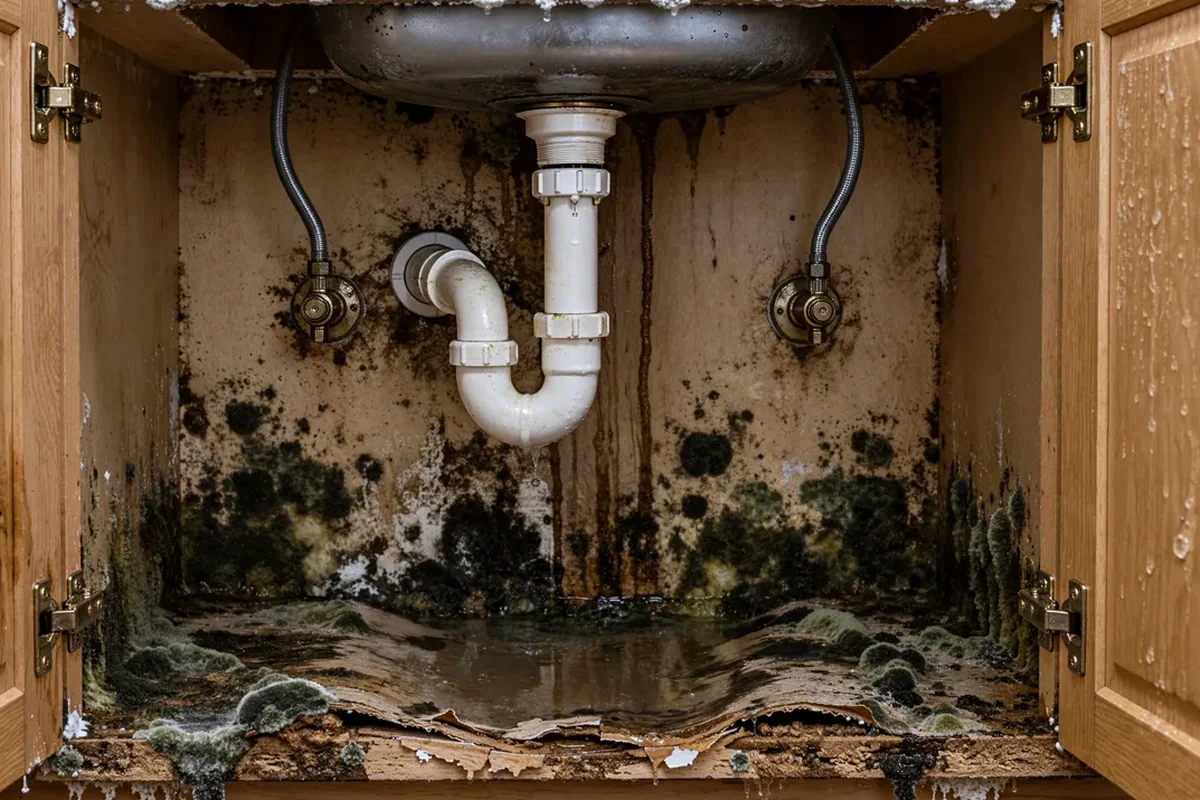
A concealed leak often shows itself as a stale smell, a tinted ceiling patch, blistering paint or a floor that feels soft. Each means moisture is present, even if no growth is visible yet. Call the number on this page to be connected with a local mold company in New Hill.
Quick test: does it come back?
- Wipe the area and let it dry.
- Watch it for several days.
- Note any new stain, odor or warping.
If it returns, the source is still active, and the materials behind it need a professional look. Repeat staining in the same spot almost always means a hidden source nearby.
Rentals and student housing
Multi-unit buildings and rental houses near campuses and downtowns share pipes between units, so a leak upstairs may soak a ceiling below. Tenants often notice the stain before anyone knows which line failed, which delays repair and lets growth spread. Neighbors sharing a stack can compare notes and call together.
Low ground along creeks keeps crawl spaces humid, and a pipe leak down there compounds it. Water-side homes in this area should get any wet insulation checked quickly.
Farmhouses with additions, barns and detached garages have plumbing spread over many structures, and a quiet leak in a rarely visited room is easy to miss out here.
Large jobs and the license rule
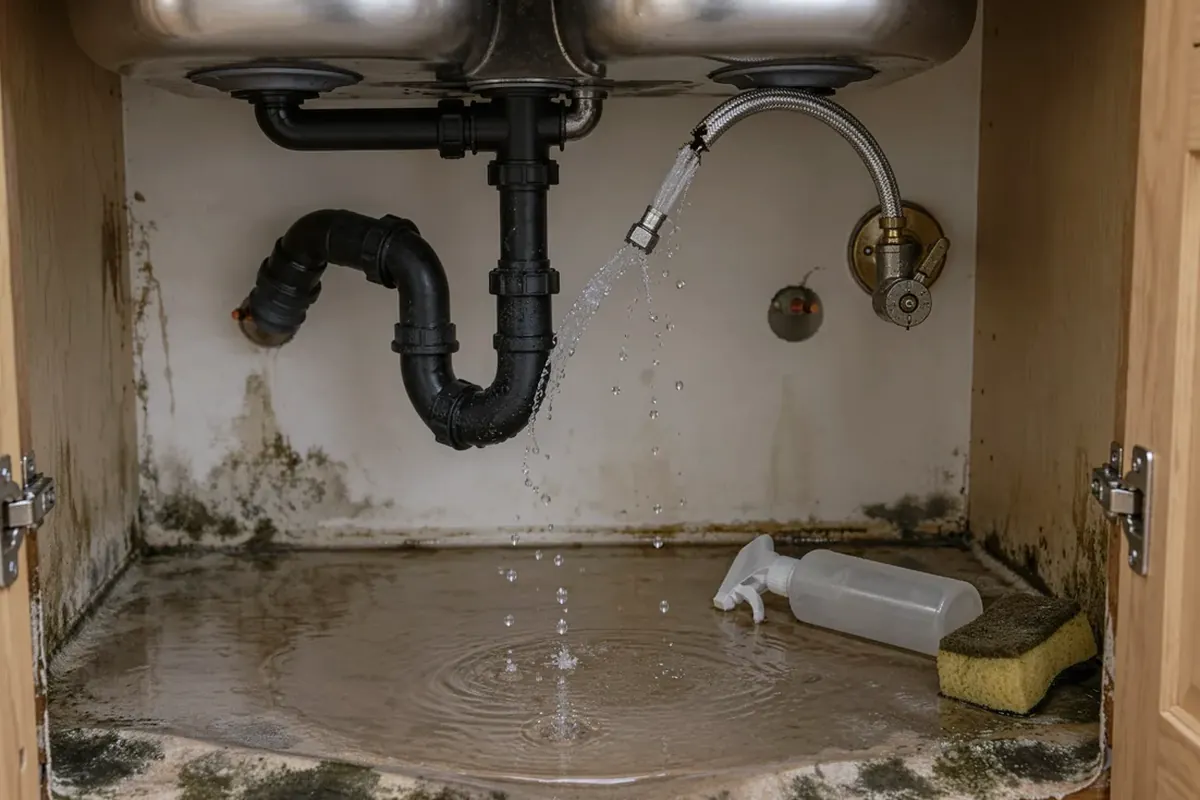
Whole-house projects that include rebuilding walls and floors can reach the point where North Carolina requires a general contractor license. Check anyone quoting that scope with the NCLBGC lookup before signing, not after the work starts. Ask the company whether any rebuild work falls under that rule.
Steps a typical job follows
- Confirm the leak is repaired.
- Set up containment around the affected area.
- Remove soaked porous materials.
- Clean and dry the framing.
- Verify dryness before anything closes up.
Photos at each stage show what came out and why, which helps if your insurer asks questions later.
Do not wait for visible growth
Waiting until mold shows is the most common mistake after a leak. By then the hidden side of the wallboard is usually well along. A moisture check costs little compared with reopening the same wall a season later. Spotting the issue early keeps repairs small and contained.
Rules and offices for New Hill mold jobs
For a big tear-out and rebuild, look the company up on the NC Licensing Board for General Contractors site; its search works by name, number or county, and a license is required at $40,000 and up.
Renting? N.C.G.S. 42-42 requires landlords to keep a home fit and habitable and to repair supplied plumbing and heating; outside an emergency, send the repair request in writing.
Under G.S. 160D-1110, many repairs of $40,000 or less in a house need no permit, but structural, plumbing, electrical and HVAC changes do. Check with Wake County Permits and Inspections.
If creek or river water came inside, look the address up in North Carolina's Flood Risk Information System and call your insurer before cleanup begins.
Help is also available nearby in Holly Springs, Moncure and Apex.
Leak & Burst Pipe Mold Removal questions in New Hill
Who do I call first, a plumber or a mold company?
Should I use bleach on the stain?
Can a hard freeze really cause mold?
How do I choose a company for a big job?
More mold services in New Hill
Leak & Burst Pipe Mold Removal nearby
Helpful guides
Sources
- Wake County Permits and Inspections
- Wake County Permits and Inspections: flood information
- N.C. General Statutes 87-1: general contractor license
- NC Licensing Board for General Contractors: consumer FAQ
- NC Division of Public Health: choosing a mold consultant
- N.C. General Statutes 42-42: landlord to provide fit premises
- NC Flood Risk Information System
Last updated: