A moisture meter and a thermal camera can map wet areas without cutting anything, and then a small opening confirms what is inside. That keeps demolition limited to the damaged section. Call the number on this page to be connected with a local mold company in Chapel Hill.
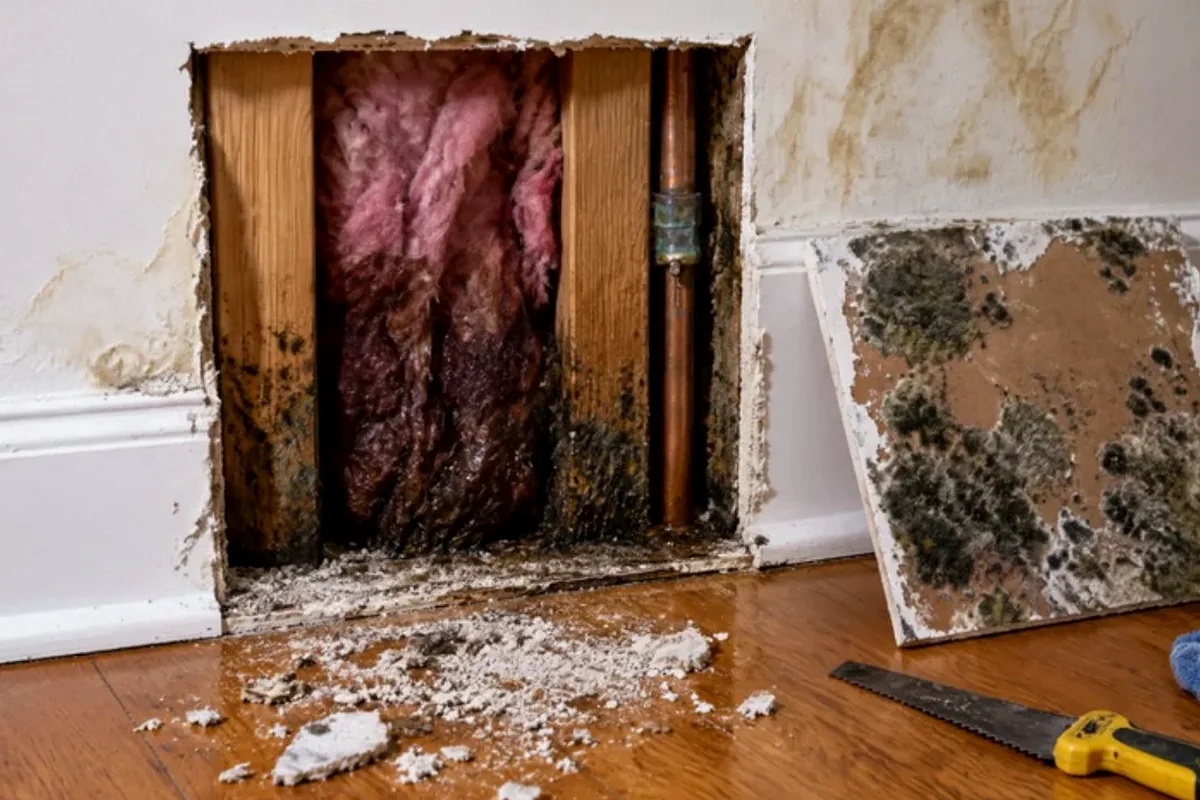
Rooms people overlook
Closets on exterior walls, laundry rooms, the wall behind a water heater and the corner under an attic roof valley are often missed. They share one trait: little airflow and an occasional source of moisture, which suits growth well.
Windows, siding and flashing
Wind-driven rain can sneak in behind siding or around window corners, then run down inside the wall without ever showing on the surface. Aging caulk, missing flashing and loose trim let in small amounts of water each storm, and walls under them slowly soak.
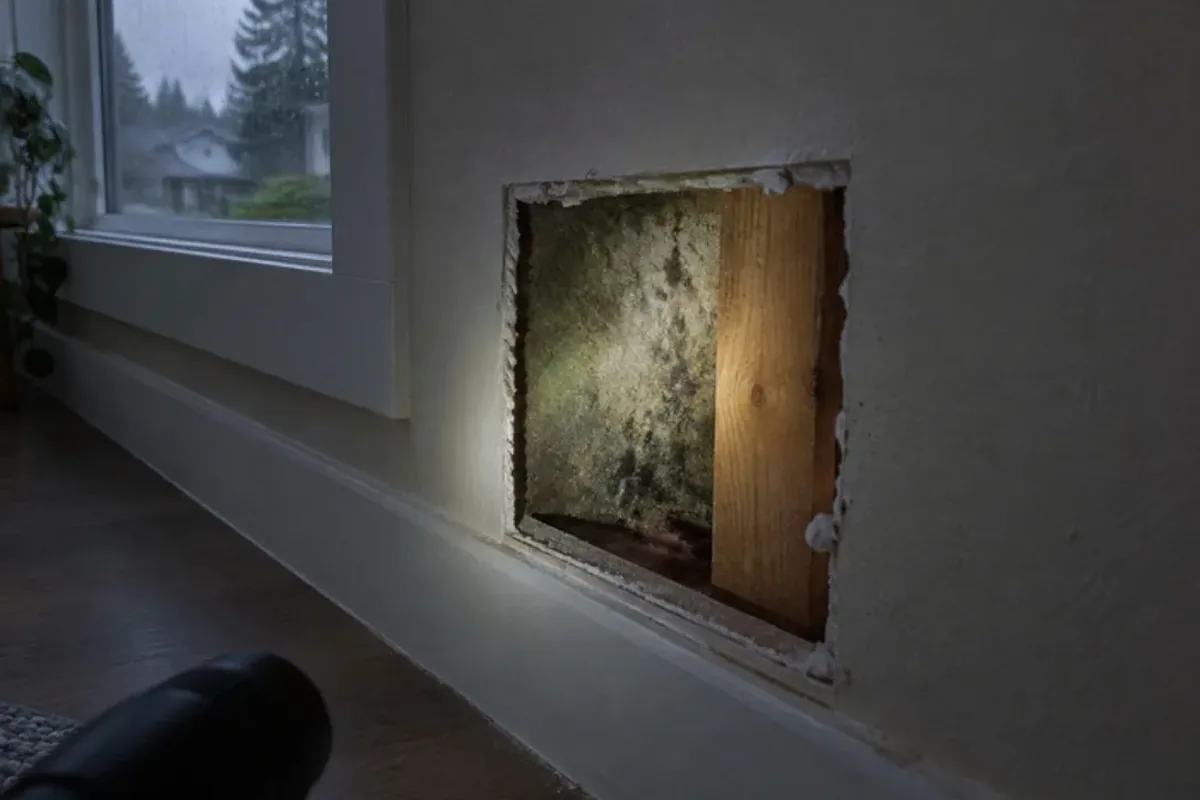
Why prices vary between companies
One bid may assume opening the whole wall, another only a window-sized section after a camera scan. Differences in containment, equipment and disposal also shift the number. Compare the scope line by line and ask each company why it chose its cut-out size.
What the visit looks like
A company usually starts with moisture meter readings, maybe a thermal image, and a look at the likely source. Then it makes a small opening to see the cavity. What it finds sets how far the cut-out goes and how much containment is needed.
Do and do not
- Do photograph and note when you noticed it.
- Do shut off the water if a pipe is leaking.
- Do not paint over a stain.
- Do not drill or cut blindly into a wet wall.
Careless opening can spread dust and hide the evidence a company needs.
Rules and offices for Chapel Hill mold jobs
For a big tear-out and rebuild, look the company up on the NC Licensing Board for General Contractors site; its search works by name, number or county, and a license is required at $40,000 and up.
Renting? N.C.G.S. 42-42 requires landlords to keep a home fit and habitable and to repair supplied plumbing and heating; outside an emergency, send the repair request in writing.
Under G.S. 160D-1110, many repairs of $40,000 or less in a house need no permit, but structural, plumbing, electrical and HVAC changes do. Check with the Town of Chapel Hill building and development services office.
If creek or river water came inside, look the address up in North Carolina's Flood Risk Information System and call your insurer before cleanup begins.
Help is also available nearby in Carrboro, Durham and Morrisville.
Getting to know Chapel Hill
Calls come in from across Chapel Hill, including Southern Village, Chapel Hill Northside, The Shire.
The Town's flood page lists areas that flood during heavy rain, including Bolin Creek when it leaves its banks, S. Estes Drive, Cleland Road and parts of Franklin Street, and advises avoiding parking in the floodplain.
Mold in Walls questions in Chapel Hill
Who rebuilds the wall after removal?
Who pays when a rental wall has mold?
Why do exterior walls in my house stay damp?
Do I need to leave while the wall is open?
More mold services in Chapel Hill
Mold in Walls nearby
Helpful guides
Sources
- Town of Chapel Hill Building Permits and Inspections
- Town of Chapel Hill Building Permits and Inspections: flood information
- N.C. General Statutes 87-1: general contractor license
- NC Licensing Board for General Contractors: consumer FAQ
- NC Division of Public Health: choosing a mold consultant
- N.C. General Statutes 42-42: landlord to provide fit premises
- NC Flood Risk Information System
Last updated: