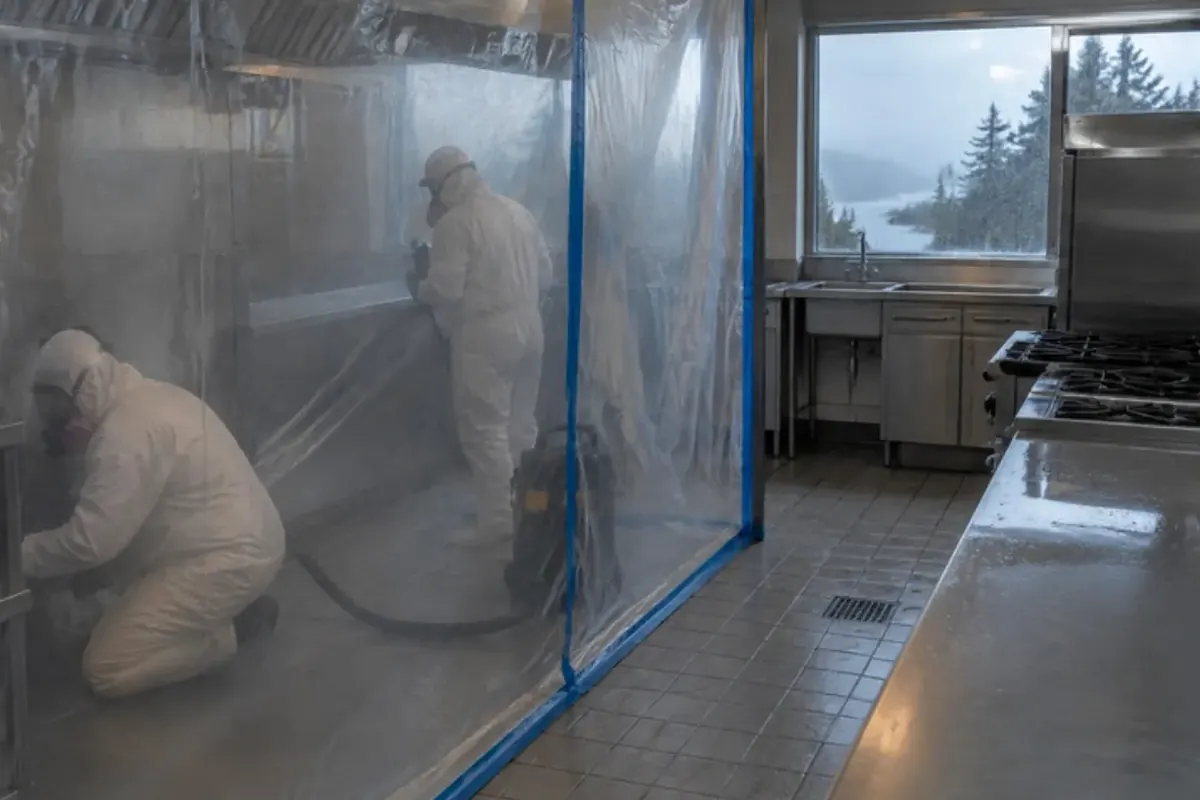
Often a business can stay open if the work area is sealed off and the air is exhausted outside. Larger jobs may mean closing a suite or working evenings, and the written plan should say what is realistic for your space, your staff and your customers. Call the number on this page to be connected with a local mold company in Clayton.
When a tenant reports it first
Often the first sign is an employee or tenant message about a smell. Take it seriously, visit the area, and write down what you see. A prompt response protects the people in the space and shows the landlord, owner or lender that you acted.
Storms and standing water
Heavy rain and tropical remnants push water through roofs, doors, loading docks and low parking areas, and creeks near Smithfield can rise onto ground-level space. After a wet week, check carpets, baseboards and storage on the lowest floor, even if nothing looks wet.
A lot of Clayton's apartments and neighborhood retail went up in the 2000s, and tight envelopes with large HVAC systems can trap moisture when equipment is poorly maintained.
Buildings near a river, creek or lake around Clayton sit on damp ground, and after heavy rain, ground-level storerooms and low parking areas can take on water.

Rebuild is often separate
Once moldy drywall, ceiling tile and insulation are out, someone must replace them, and the finished space has to match your lease or code. Cleanup quotes may not include that work. Ask whether rebuild is part of the price, and whether it could push a project toward the $40,000 contractor license line.
Rules and offices for Clayton mold jobs
Be wary of anyone who wants air sampling as the very first step. North Carolina's public health guidance warns about exactly that, and suggests asking plenty of questions before you pay.
In a rental, written notice to the landlord starts the clock under state law, which requires repairs that keep the unit in a fit and habitable condition.
Once the moldy material is gone, the rebuild is its own step, and some of it, like new ductwork or structural framing, may need sign-off from the Town of Clayton Development Services office.
If creek or river water came inside, look the address up in North Carolina's Flood Risk Information System and call your insurer before cleanup begins.
Callers here are often matched with companies that work in Smithfield, Wendell and Selma as well.
Protect people and records
Tell employees and tenants what is happening and where to avoid. Move files, electronics, stock and anything valuable out of the work area first, and list what was moved. If anyone has health concerns, they can talk with their doctor, and your lease or employer policies may add notice duties.
Maintain the HVAC
Replace filters, clean coils and test drain lines on a regular schedule. Make sure rooftop units are level and that insulation on cold ducts is intact, then record each service visit so patterns are easy to see. Poor maintenance is a common reason mold returns after a first cleanup.
Around Clayton
Calls come in from across Clayton, including US 70, Clayton River Walk on the Neuse, The Clayton Center.
Clayton is in the Neuse River watershed and its town limits extend northeast to the river.
Commercial Mold Remediation questions in Clayton
How long does a commercial job take?
Should the assessor and the remediator be different?
How do I tell if the HVAC is involved?
Will insurance cover mold in a business?
More mold services in Clayton
Commercial Mold Remediation nearby
Helpful guides
Sources
- Town of Clayton Development Services / Inspections
- Johnston County Building Inspections Department: flood information
- N.C. General Statutes 87-1: general contractor license
- NC Licensing Board for General Contractors: consumer FAQ
- NC Division of Public Health: choosing a mold consultant
- N.C. General Statutes 42-42: landlord to provide fit premises
- NC Flood Risk Information System
Last updated: