Mold inside a wall usually means water got in from a plumbing leak, a window or roof failure, or condensation, and it has stayed damp. A company reads moisture, opens a small section and removes what stayed wet. Call the number on this page to be connected with a local mold company in Clayton.
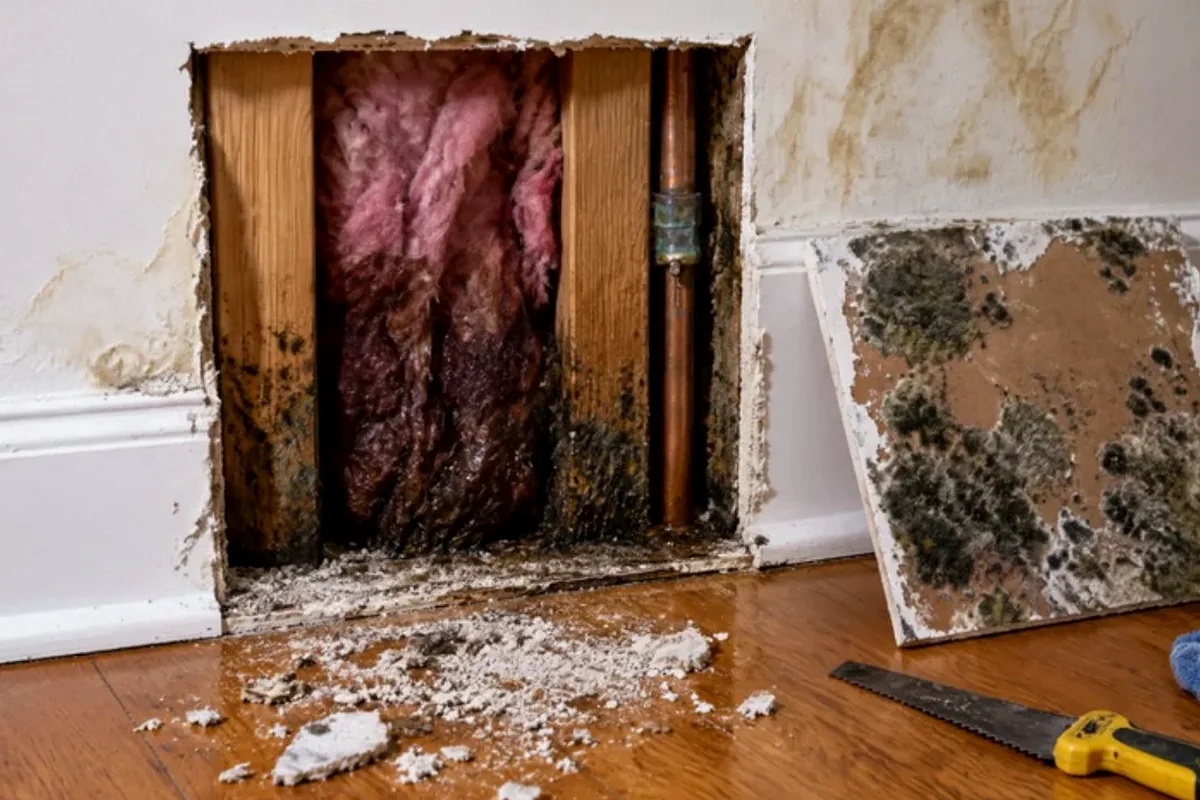
Where walls get wet
- Around tubs, showers and toilets.
- Below windows and exterior doors.
- Behind refrigerators and dishwashers.
- Along exterior walls near downspouts.
Those spots take the most punishment, so start the search there before cutting anywhere else.
Plumbing inside the wall
Supply lines, drain connections and shower valves hide behind drywall. A slow weep from a fitting can soak insulation for months. The first sign may be a stain at the baseboard below or a dehumidifier that never seems to catch up.
A lot of Clayton's homes went up in the 2000s. Tightly sealed new walls trap moisture when a window flashing detail or a fitting fails, and the cavity can stay wet unnoticed.
Homes near a river, creek or lake often sit on damp ground, so moisture can wick up into lower wall framing and baseboards, especially in low spots and after heavy rain.
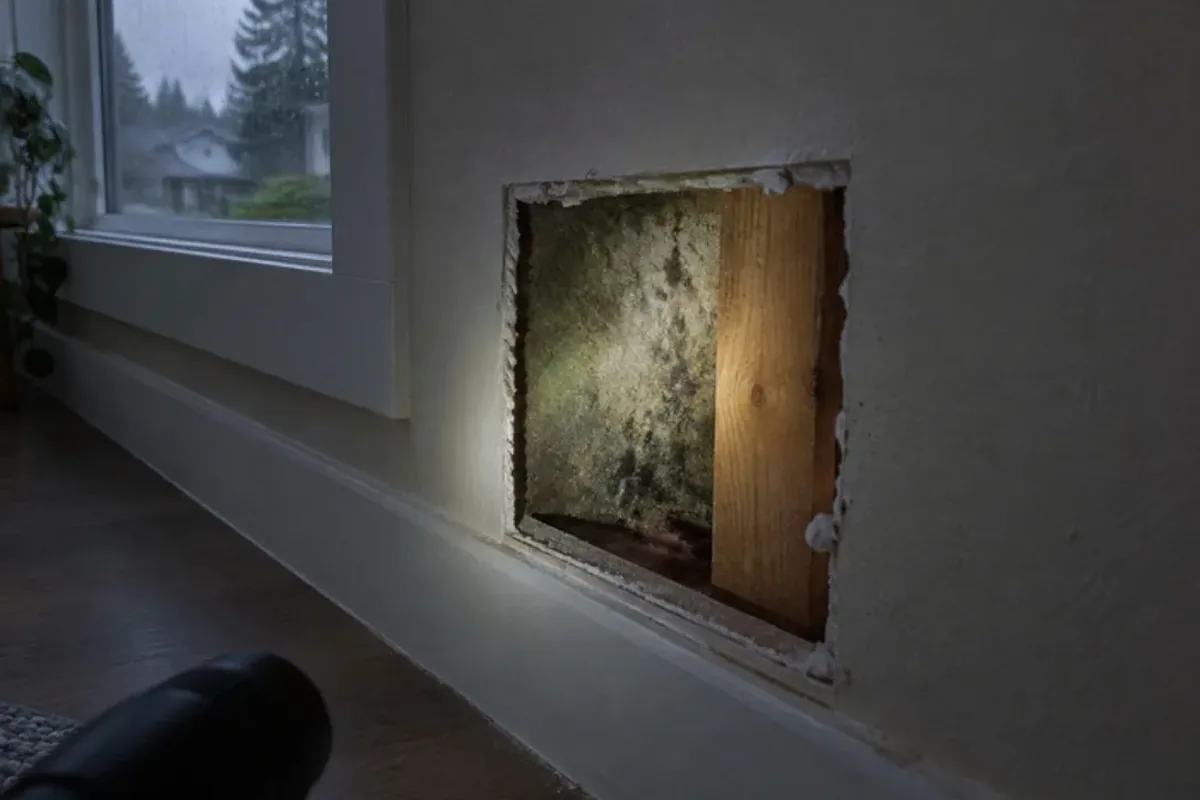
Items on a typical scope
- Moisture mapping and cut-out locations.
- Containment and air filtration.
- Removal and disposal of wet or moldy material.
- Cleaning, drying and a moisture recheck.
Ask that each of these appear in writing.
Before you hire in Clayton
North Carolina ties larger jobs to the general contractor license: under G.S. 87-1, a project costing $40,000 or more needs a contractor holding a license from the NC Licensing Board for General Contractors.
In a rental, written notice to the landlord starts the clock under state law, which requires repairs that keep the unit in a fit and habitable condition.
Cleanup on its own rarely needs a permit. Replacing framing, wiring, ductwork or plumbing afterward can, and the Town of Clayton Development Services office can tell you what applies.
If creek or river water came inside, look the address up in North Carolina's Flood Risk Information System and call your insurer before cleanup begins.
Help is also available nearby in Smithfield, Wendell and Selma.
How the wall gets handled
- Mark the wet area and set up containment.
- Cut out drywall and insulation that are wet or moldy.
- HEPA vacuum and clean the studs and plates.
- Dry the cavity before anything closes.
Seasonal checks
Look at windows and siding before the rainy season, inspect under sinks and behind appliances in summer, and check exposed plumbing after a hard freeze. A ten-minute walk-through twice a year can catch a damp wall before it needs a cut-out.
Around Clayton
Calls come in from across Clayton, including US 70, Clayton River Walk on the Neuse, The Clayton Center.
Clayton is in the Neuse River watershed and its town limits extend northeast to the river.
Mold in Walls questions in Clayton
Can I just paint over the stain?
Is it safe to cut open the wall myself?
Who pays when a rental wall has mold?
Can storm water cause mold inside walls?
More mold services in Clayton
Mold in Walls nearby
Helpful guides
Sources
- Town of Clayton Development Services / Inspections
- Johnston County Building Inspections Department: flood information
- N.C. General Statutes 87-1: general contractor license
- NC Licensing Board for General Contractors: consumer FAQ
- NC Division of Public Health: choosing a mold consultant
- N.C. General Statutes 42-42: landlord to provide fit premises
- NC Flood Risk Information System
Last updated: