Fix the source first: a plumber stops the leak, then a mold company handles the growth it left behind. Skipping the repair means the same wall gets wet again. Call the number on this page to be connected with a local mold company in Clayton.
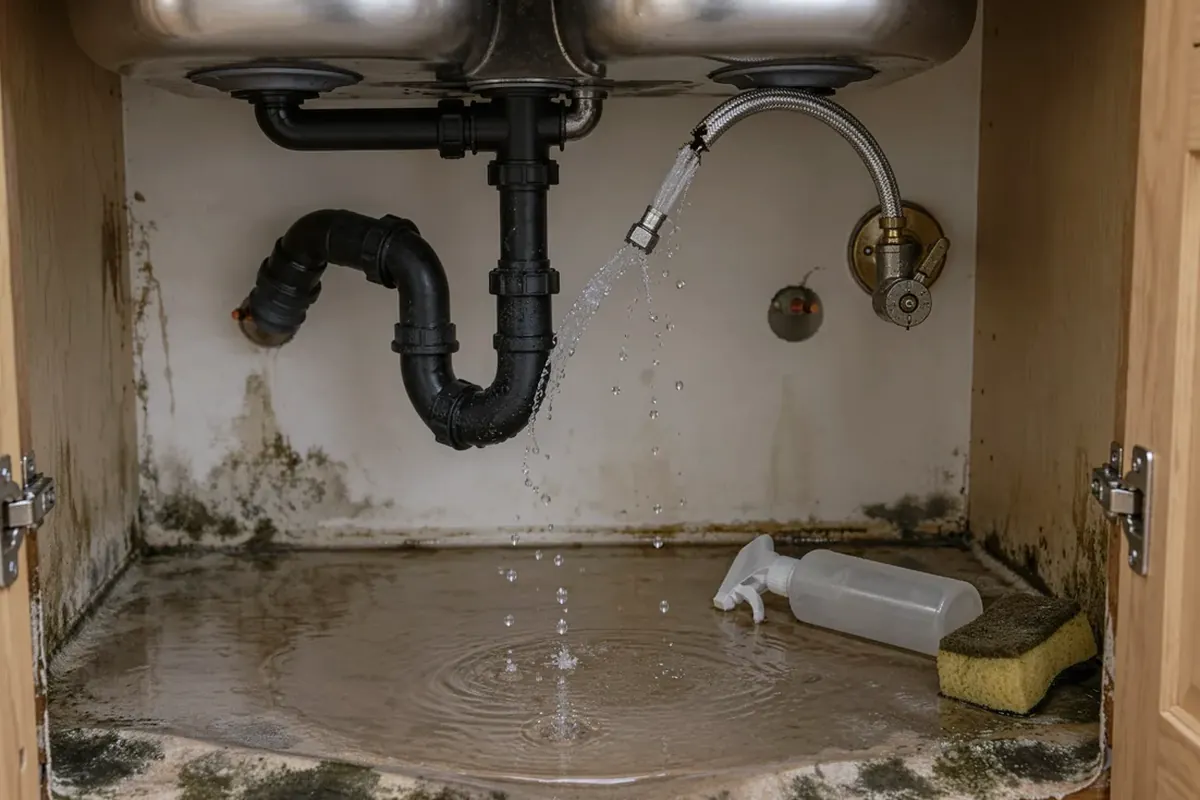
Quick test: does it come back?
- Wipe the area and let it dry.
- Watch it for several days.
- Note any new stain, odor or warping.
If it returns, the source is still active, and the materials behind it need a professional look. Repeat staining in the same spot almost always means a hidden source nearby.
Why Triangle humidity makes leaks worse
Long, muggy summers mean walls rarely dry on their own. A small supply-line drip that might evaporate in a dry climate stays damp here for weeks, and warm indoor air gives mold what it needs to take hold on drywall and framing. Humid air slows everything.
Because many Clayton houses were built in the 2000s, tight construction holds moisture in once a leak starts, and wet drywall can stay damp longer than owners expect.
Low ground along creeks keeps crawl spaces humid, and a pipe leak down there compounds it. Water-side homes in this area should get any wet insulation checked quickly.
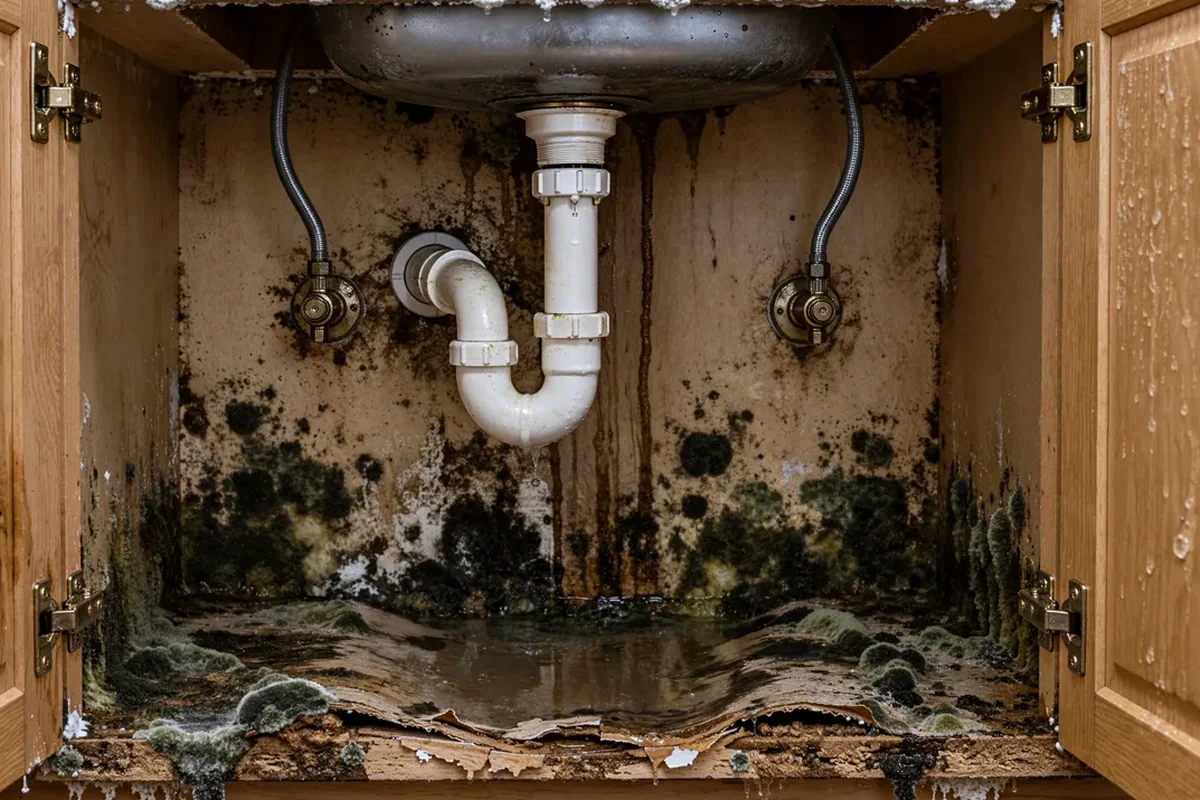
Plumbing repair is a separate line
Mold work does not fix the pipe. Budget for the plumber, the drying and mold work, and the rebuild as three distinct pieces. Getting them itemized keeps surprises down and lets you handle each step with the right trade in Johnston County. Keep the paperwork together.
Local facts for a Clayton mold job
Be wary of anyone who wants air sampling as the very first step. North Carolina's public health guidance warns about exactly that, and suggests asking plenty of questions before you pay.
Tenants should put leak and mold complaints in writing. North Carolina's landlord statute, G.S. 42-42, covers repairs needed to keep a rental fit to live in.
Cleanup on its own rarely needs a permit. Replacing framing, wiring, ductwork or plumbing afterward can, and the Town of Clayton Development Services office can tell you what applies.
After heavy Piedmont rain, the NC Flood Risk Information System is the place to check a property's flood zone before talking to the insurance company.
Many of the same companies also take calls from Smithfield, Wendell and Selma.
Be present for the opening
If you can, be home when walls or ceilings are first cut. Seeing the wet insulation and the stained back side of the drywall tells you more than any report, and it helps you agree on how far the removal should reasonably go. Ask questions as they cut.
Keep indoor humidity in range
EPA suggests keeping indoor humidity below about 60 percent, ideally between 30 and 50. After any leak, a dehumidifier and open air flow help the structure finish drying, which matters in Johnston County where summer air carries plenty of moisture. This is true in every part of the Triangle.
Getting to know Clayton
Calls come in from across Clayton, including US 70, Clayton River Walk on the Neuse, The Clayton Center.
Clayton is in the Neuse River watershed and its town limits extend northeast to the river.
Leak & Burst Pipe Mold Removal questions in Clayton
Can I just dry the area myself?
Does a burst pipe always mean mold?
Is a slab leak a mold problem?
How do I choose a company for a big job?
More mold services in Clayton
Leak & Burst Pipe Mold Removal nearby
Helpful guides
Sources
- Town of Clayton Development Services / Inspections
- Johnston County Building Inspections Department: flood information
- N.C. General Statutes 87-1: general contractor license
- NC Licensing Board for General Contractors: consumer FAQ
- NC Division of Public Health: choosing a mold consultant
- N.C. General Statutes 42-42: landlord to provide fit premises
- NC Flood Risk Information System
Last updated: